Abdus Salam based on NeemTime research
Who is Abdus Salam (Biography / Personal Details)
Abdus Salam was the first Pakistani Nobel laureate and one of the twentieth century’s most influential theoretical physicists.
Born on 29 January 1926 in Jhang, in what is now Pakistan, he became internationally renowned for explaining how electromagnetic and weak nuclear forces are connected.
His work on electroweak theory earned him the 1979 Nobel Prize in Physics, which he shared with Sheldon Glashow and Steven Weinberg.
Salam’s Nobel-winning research helped establish ideas that became central to the modern Standard Model of particle physics.
Beyond research, he became a passionate advocate for scientific education and research opportunities in developing countries.
He founded the International Centre for Theoretical Physics in Trieste in 1964, creating an important international meeting place for scientists from developing nations.
He also served as a scientific adviser to the government of Pakistan and remained involved with scientific development in his home country.
Salam was a member of the Ahmadiyya Muslim Community, a fact that later became deeply connected with his complicated public standing in Pakistan.
He died in Oxford on 21 November 1996 at the age of 70 and was buried in Rabwah, now Chenab Nagar, Pakistan.
His scientific achievements, international institution-building and commitment to developing-world science continue to shape how Abdus Salam is remembered.
Abdus Salam Height, Appearance, Fitness & How to Get a Body Like Abdus Salam
There is no reliable official record establishing Abdus Salam’s exact height, so precise figures sometimes published online should be treated cautiously.
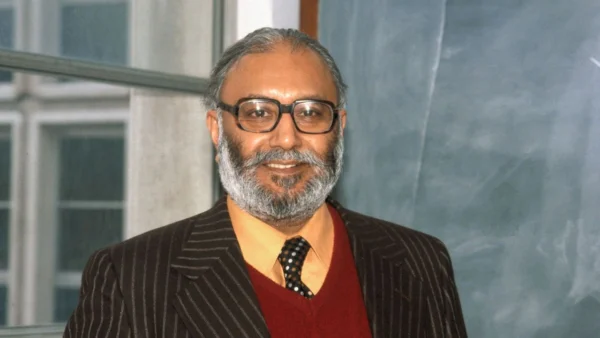
Photographs of Salam generally show a slim, scholarly-looking man whose appearance became recognizable through his distinctive glasses, formal clothing and later-life moustache.
His public photographs often show him in suits, academic robes or traditional South Asian clothing rather than the athletic presentation associated with modern celebrity profiles.
No authoritative source documents a specific body weight, body-fat percentage or professionally measured physical statistics for him.
Salam was celebrated primarily for intellectual achievement, and surviving biographies do not identify a structured bodybuilding or fitness programme.
There is also no reliable evidence establishing a particular diet, gym routine or exercise schedule that readers could accurately reproduce.
Because of that, claims about achieving “Abdus Salam’s body” should not be presented as a documented fitness method.
A sensible modern approach would instead combine regular physical activity, strength training, cardiovascular exercise, adequate sleep and balanced nutrition according to individual needs.
His photographs should therefore be regarded as historical records of his appearance rather than evidence of a specific fitness lifestyle.
For accurate biography writing, his height and physique are best described as undocumented rather than filled with an invented measurement.
Abdus Salam Family
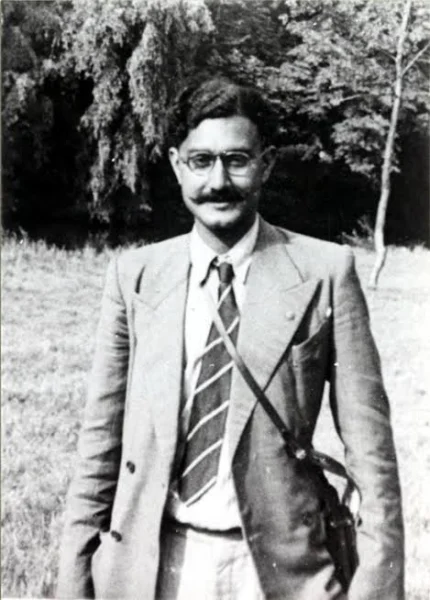
Abdus Salam Family 5
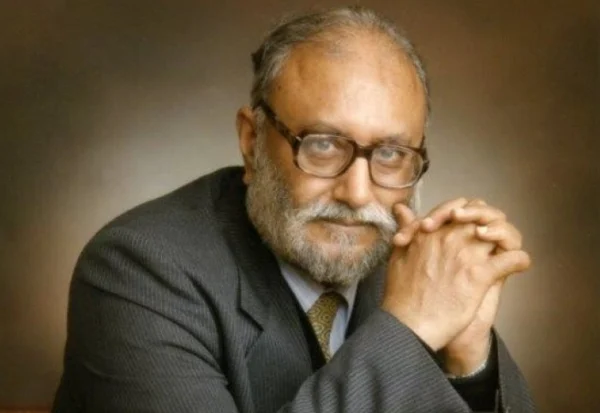
Abdus Salam Family 4
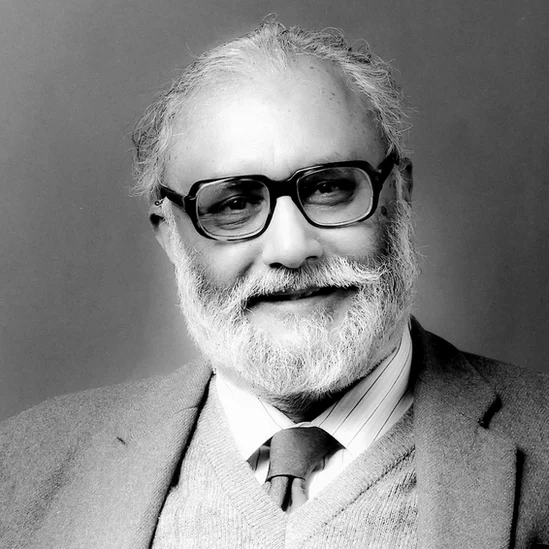
Abdus Salam Family 3
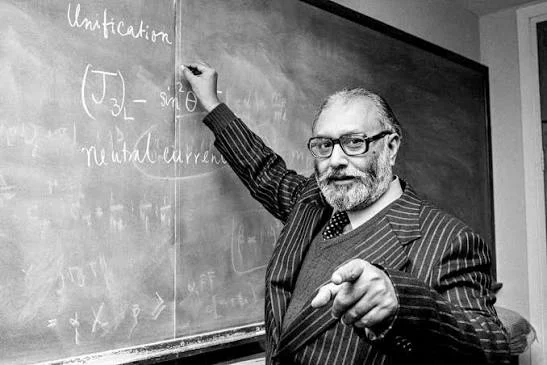
Abdus Salam Family 2
Abdus Salam Family
Early Life, Childhood, Education & Family Background of Abdus Salam
Abdus Salam’s extraordinary academic journey began in Jhang, where his father worked as an official in the education department of a poor farming district.
His family had a strong tradition of religious devotion and learning, creating an environment in which education was highly valued.
At only 14, Salam achieved the highest marks then recorded for the Matriculation Examination of the University of the Punjab.
His return from Lahore by bicycle became a celebrated local event, with residents turning out to welcome the exceptionally gifted young student.
He received a scholarship to Government College, Lahore, where he studied mathematics and physics before completing his master’s degree in 1946.
That same year, another scholarship took him to St John’s College, Cambridge, where he achieved a double first in mathematics and physics.
In 1950, Cambridge awarded him the Smith’s Prize for an outstanding pre-doctoral contribution to physics.
He completed his PhD in theoretical physics at Cambridge, with research in quantum electrodynamics that quickly attracted international attention.
Salam returned to Pakistan in 1951 hoping to build a strong research environment but found that opportunities for theoretical physics were limited.
That experience became one of the forces behind his later determination to create international scientific opportunities for researchers from developing countries.
Personal Life Highlights of Abdus Salam (Family Members)
Abdus Salam kept his private life largely separate from his public scientific career, despite eventually becoming an internationally famous Nobel laureate.
He married Amtul Hafeez Begum in 1949, and their family included four children, according to major biographical records.
Their children included daughters Aziza, Anisa Bushra and Asifa, along with son Ahmad Salam.
Salam later married British scientist Louise Johnson in 1968 while remaining married to his first wife under the family arrangement he followed.
Louise Johnson became a distinguished molecular biophysicist and later served as a professor at Oxford University.
Salam and Johnson had two children, son Umar Salam, born in 1974, and daughter Sayyeda Salam, born in 1982.
The unusual structure of Salam’s family attracted biographical attention because both households were part of his life.
Several of his children later became involved in professional, academic or charitable activities connected with his legacy.
His son Ahmad became particularly involved with the family’s work surrounding the Spirit of Abdus Salam Award and the preservation of his father’s scientific vision.
Salam died in Oxford in 1996, leaving behind six children and a family whose later activities helped preserve his scientific and humanitarian legacy.
Abdus Salam Partners, Relationships & Dating History
Abdus Salam’s relationship history is unusually documented for a scientist because his two marriages formed part of his public biography.
His first marriage was to his cousin, Amtul Hafeez Begum, in 1949.
The couple built a family in Pakistan and had four children whose names and family connections have appeared in biographical records.
Salam later met Louise Johnson, a British scientist who was then studying physics at University College London.
Their professional and personal relationship developed over several years before they married in London in 1968.
Johnson subsequently became a leading molecular biophysicist and an Oxford academic, giving the relationship a significant scientific dimension as well as a personal one.
Salam and Johnson had two children, Umar and Sayyeda, who were born in 1974 and 1982 respectively.
Biographical accounts describe Salam as maintaining separate personal and professional worlds, with relatively little public discussion of intimate details.
There is no credible evidence supporting a long list of additional romantic partners beyond his two documented marriages.
For readers researching Salam’s relationships, the important historical fact is therefore his two marriages and the families associated with each rather than unverified dating stories.
Abdus Salam Career Journey, Breakthroughs, Achievements & Awards
Salam’s career changed the history of physics when his theoretical work helped establish the electroweak theory of fundamental interactions.
After returning to Pakistan in 1951, he taught mathematics at Government College Lahore and became head of the Mathematics Department at Punjab University in 1952.
He returned to Cambridge as a lecturer in 1954 and later joined Imperial College London, where he built a major theoretical physics group.
In 1964, he founded the International Centre for Theoretical Physics in Trieste, an institution designed to connect scientists across the developing and developed worlds.
His research with Sheldon Glashow and Steven Weinberg contributed to the unification of electromagnetic and weak nuclear interactions.
The theoretical framework predicted phenomena including neutral weak currents that were subsequently confirmed experimentally.
In 1979, Salam shared the Nobel Prize in Physics with Glashow and Weinberg for their contributions to electroweak theory.
His other distinctions included the Royal Society’s Hughes Medal, Royal Medal and Copley Medal, reflecting the breadth of his scientific reputation.
He also received the Atoms for Peace Award and numerous honorary degrees and international honours during his career.
His greatest institutional achievement may have been combining frontier physics with a sustained campaign to expand scientific opportunities for researchers in developing countries.
Current Life Highlights of Abdus Salam (Career / Other Work)
Abdus Salam died in Oxford on 21 November 1996, so his current significance is found through his continuing scientific and institutional legacy rather than active career work.
The International Centre for Theoretical Physics in Trieste remains closely associated with the vision he established for international scientific cooperation.
The centre continues programmes supporting researchers and scientific development across countries with limited research infrastructure.
His family also continues to support initiatives inspired by his commitment to science in developing parts of the world.
The Spirit of Abdus Salam Award continues to recognize people working to promote science and technology in disadvantaged regions.
In 2026, the award again recognized individuals whose work reflected Salam’s emphasis on scientific capacity and international cooperation.
His scientific archive at ICTP contains personal papers, notebooks, correspondence and the handwritten draft of his 1979 Nobel speech.
A digitization project is helping preserve these materials and make Salam’s historical record more accessible to researchers and the wider public.
Imperial College London has also commemorated his legacy through the Abdus Salam Library and continuing academic activities connected with his work.
More than three decades after his Nobel Prize, Salam therefore remains relevant through institutions, archives, awards and scientific education rather than through new personal projects.
Abdus Salam Most Popular Movies, TV Shows, Media Appearances & Other Work
Abdus Salam was not an actor or television entertainer, but his extraordinary life has inspired documentaries, interviews and major media productions.
The 2018 documentary film Salam: The First ****** Nobel Laureate examined his scientific career, personal life, faith and complicated relationship with Pakistan.
Directed by Anand Kamalakar, the documentary presented Salam as both a groundbreaking physicist and a figure shaped by political and religious tensions.
Another documentary project, The Dream of Symmetry, explored the relationship between Salam’s scientific ideas, humanitarian vision and search for harmony.
His Nobel Prize acceptance speech remains one of his most significant recorded public appearances because he connected modern physics with his personal religious worldview.
Archival photographs and filmed interviews have also become important sources for documentaries about twentieth-century science.
His public lectures and scientific discussions are preserved in various academic and institutional archives.
ICTP has repeatedly organized screenings, lectures and commemorative events examining his contribution to physics and international scientific cooperation.
Media coverage of Salam frequently focuses on the contrast between his global scientific stature and the difficulties surrounding his recognition in Pakistan.
His story has consequently reached audiences far beyond physics through documentary filmmaking, historical journalism, academic events and archival material.
Abdus Salam Most Popular News, Controversies, Career Debates / Why Abdus Salam Is Popular
Abdus Salam became internationally famous after winning the 1979 Nobel Prize in Physics, but his religious identity made his recognition in Pakistan considerably more complicated.
Salam belonged to the Ahmadiyya Muslim Community, and Pakistan’s 1974 constitutional amendment declared Ahmadis to be non-Muslim under Pakistani law.
He resigned from several formal advisory roles connected with Pakistan after that constitutional change, although he continued supporting Pakistani scientists and scientific institutions.
His Nobel achievement nevertheless remained a landmark in Pakistan’s scientific history because he was the country’s first Nobel laureate.
In 1989, Pakistan’s government awarded him the Nishan-e-Imtiaz, one of the country’s highest civil honours, years after his Nobel victory.
His grave in Rabwah became another focus of controversy after the word “Muslim” was removed from the inscription on his gravestone.
The episode became symbolic of the tension between his internationally recognized scientific identity and the treatment of Ahmadis in Pakistan.
At the same time, Salam continued to receive strong recognition internationally for his physics, institution-building and advocacy of science in developing countries.
Claims that his Nobel work was undeserved have circulated in some commentary, but the Nobel Foundation records his award for contributions to electroweak theory.
His enduring popularity therefore rests on both his scientific achievement and the wider historical questions surrounding science, identity, recognition and religious discrimination.
Abdus Salam Known Unknown Facts, Trivia + People Also Ask / Search & Answers
One remarkable fact about Salam is that he achieved the highest recorded marks in the University of the Punjab’s Matriculation Examination at only 14 years old.
He was elected a Fellow of the Royal Society in 1959 at the age of 33, making him one of the youngest scientists to receive that distinction.
Salam helped establish ICTP because he wanted talented scientists from developing countries to remain connected with international research without permanently leaving their home institutions.
His 1979 Nobel Prize speech famously incorporated Quranic references, revealing how closely he connected his religious faith with his understanding of scientific inquiry.
The handwritten draft of that Nobel speech is now among the historically important materials preserved in his archive at ICTP.
Who was Abdus Salam? Abdus Salam was a Pakistani theoretical physicist who shared the 1979 Nobel Prize in Physics for work on the electroweak theory.
When was Abdus Salam born? He was born on 29 January 1926 in Jhang, in present-day Punjab, Pakistan.
Why did Abdus Salam win the Nobel Prize? He shared the 1979 Physics Nobel for contributions to the theory unifying electromagnetic and weak interactions.
Was Abdus Salam married? Yes, he married Amtul Hafeez Begum in 1949 and Louise Johnson in 1968, and he had six children.
What happened to Abdus Salam? He died in Oxford on 21 November 1996 at age 70, while his scientific institutions and legacy continue to influence researchers worldwide.