Abdullah Siddiqui based on NeemTime research
Who is Abdullah Siddiqui (Biography / Personal Details)
Abdullah Siddiqui is a Pakistani singer, songwriter and producer who built his reputation through electronic pop rather than conventional mainstream music.
Born in Lahore in 2000, he began experimenting with music remarkably young and developed a sound influenced by electronic production and pop songwriting.
He learned guitar as a child and started producing electronic music around the age of 11 using basic computer-based tools.
At 16, he performed at Lahore Music Meet, marking an early public step toward a professional music career.
His song “Telescope Heart” received significant radio exposure on CityFM89 and helped introduce his work to a wider Pakistani audience.
His major breakthrough came with “Resistance,” which appeared on Nescafé Basement Season 5 and established him as one of Pakistan’s emerging electronic-pop artists.
Siddiqui subsequently released albums including Metannoya, Heterotopia, dead Beat poets and dead Beat poets: side B.
In 2021, he was included in the Forbes 30 Under 30 Asia list in the Entertainment and Sports category.
His career expanded beyond performing when he became the youngest associate producer of Coke Studio Season 14 in 2022.
Public sources differ on his exact birth date, but they consistently identify him as a Lahore-born Pakistani musician active internationally through recordings, collaborations and production work.
Abdullah Siddiqui Height, Appearance, Fitness & How to Get a Body Like Abdullah Siddiqui
Abdullah Siddiqui has a distinctive youthful appearance, often seen with glasses and a relatively understated personal style.
A commonly published estimate places his height at about 5 feet 8 inches, or approximately 172 centimetres.
That measurement is not supported by an official height record, so it is better treated as an estimate rather than a confirmed physical statistic.
Public photographs show him with black hair and dark eyes, although styling and lighting naturally vary between appearances.
His appearance has generally been associated more with his artistic identity than with a deliberately athletic or bodybuilding-focused image.
There is no reliable public evidence establishing a specific weight, body-fat percentage or professional fitness programme for Siddiqui.
He has also not publicly documented a specialised diet or workout routine that could responsibly be presented as his personal fitness formula.
Anyone seeking a similar lean appearance should instead focus on sustainable exercise, adequate protein, balanced nutrition, sleep and appropriate calorie intake.
Strength training combined with regular cardiovascular activity can improve body composition without attempting to copy an individual celebrity’s undocumented routine.
The safest approach is to treat Siddiqui’s reported measurements as reference information rather than evidence of a particular fitness regimen.
Abdullah Siddiqui Family
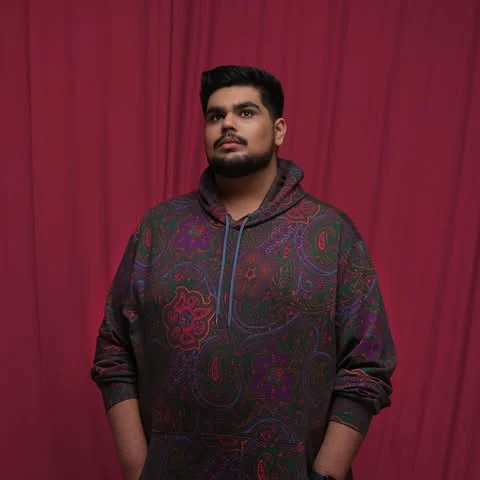
Abdullah Siddiqui Family 5
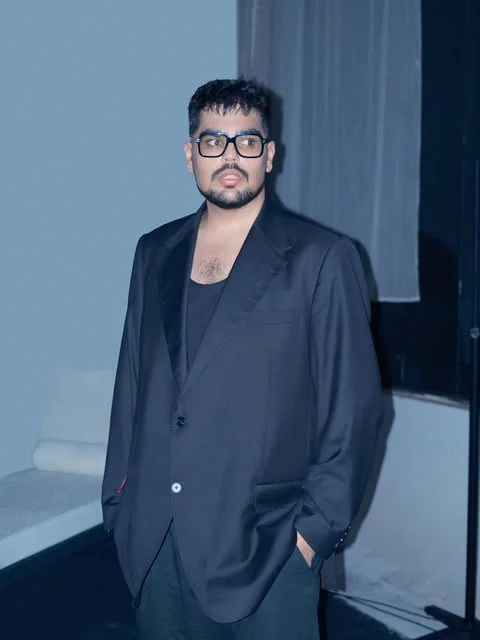
Abdullah Siddiqui Family 4
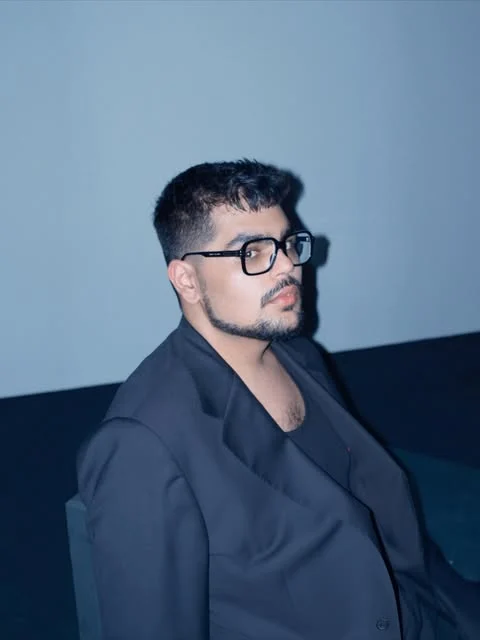
Abdullah Siddiqui Family 3
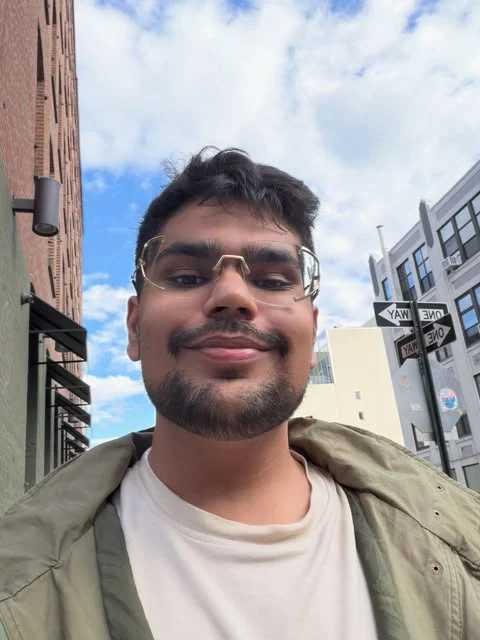
Abdullah Siddiqui Family 2
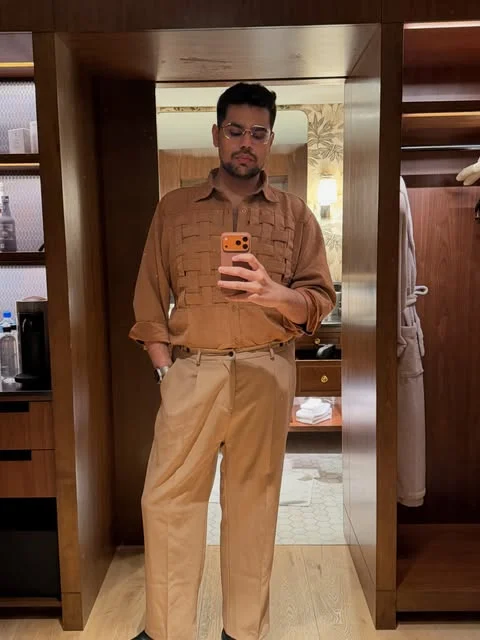
Abdullah Siddiqui Family
Early Life, Childhood, Education & Family Background of Abdullah Siddiqui
Abdullah Siddiqui’s musical story began unusually early, with his childhood interest eventually becoming a serious creative pursuit.
He grew up in Lahore and has described his parents and siblings as important influences on his exposure to different forms of music.
By around nine years old, he had begun learning guitar and was already fascinated by the possibilities of making music himself.
At approximately 11, he moved from simply playing instruments toward producing electronic music on a computer.
His earliest experiments were made with limited equipment, including basic software and an old computer, rather than a sophisticated professional studio.
He has recalled performing for his family and at school before he had any significant public profile.
At 16, he performed a substantial set at Lahore Music Meet, giving his developing career an important public platform.
During his teenage years, songs such as “Telescope Heart” demonstrated that his electronic style could attract listeners beyond his immediate circle.
Contemporary profiles also reported that he was studying A-levels while producing music with remarkably minimal equipment.
Later biographical profiles have associated him with Liberal Arts College in the United States, although detailed public information about his formal education remains limited.
Personal Life Highlights of Abdullah Siddiqui (Family Members)
Abdullah Siddiqui has generally kept his personal life considerably quieter than his professional career.
Public biographies identify Shoaib or Shuaib Siddiqui as his father and Naureen Siddiqui as his mother.
He has spoken about his parents and siblings as important influences on his early exposure to different musical styles.
His older sisters have been specifically mentioned as people who introduced him to a wider range of music during childhood.
Family members also became an early audience for his musical experiments before he performed publicly.
His childhood environment appears to have encouraged experimentation rather than treating music simply as a hobby.
Siddiqui has described how his early music-making developed at home using basic technology and considerable self-experimentation.
Unlike many entertainment personalities, he has not made extensive details about his family’s private lives part of his public image.
Public sources contain some differing spellings and incomplete information concerning individual relatives, so those details should be treated cautiously.
The strongest documented family connection is therefore the influence of his parents and siblings on his early musical development.
Abdullah Siddiqui Partners, Relationships & Dating History
Abdullah Siddiqui’s publicly documented career contains far more information about music than about romantic relationships.
Some celebrity-profile websites have described his relationship status as single, but these listings are not equivalent to a direct statement from Siddiqui.
No consistently reliable public record establishes a confirmed spouse or long-term romantic partner.
He has collaborated closely with numerous female artists, but professional musical partnerships should not automatically be interpreted as romantic relationships.
Collaborators associated with his work include Aima Baig, Meesha Shafi, Shae Gill, Annural Khalid and other Pakistani musicians.
His interviews have generally concentrated on songwriting, electronic production, artistic identity and the changing Pakistani music industry.
He has also maintained a relatively private public persona despite becoming increasingly visible through major music projects.
Online speculation about celebrities can easily confuse friendship, collaboration and romantic involvement, particularly when artists appear together in music videos.
There is therefore insufficient reliable evidence to construct a detailed dating history without repeating unverified claims.
For a factual biography, his relationship status is best described as not publicly established rather than filling the gap with rumours.
Abdullah Siddiqui Career Journey, Breakthroughs, Achievements & Awards
Abdullah Siddiqui’s career moved from bedroom-style electronic experimentation to major national music productions within only a few years.
His early public releases included “Telescope Heart,” “Fiction” and “Warm & Unredeemed,” which helped establish his electronic-pop identity.
“Resistance” became his defining early breakthrough after being released in 2018 and subsequently featured on Nescafé Basement Season 5.
The song earned recognition through a Best Emerging Talent nomination associated with the Lux Style Awards.
He expanded his catalogue with Metannoya in 2019, followed by Heterotopia in 2020 and dead Beat poets projects in 2021.
In 2021, Forbes selected him for its 30 Under 30 Asia list in Entertainment and Sports.
The following year brought a major professional leap when he became the youngest associate producer of Coke Studio Season 14.
He also produced the Pakistan Super League anthem “Agay Dekh,” featuring Atif Aslam and Aima Baig.
His work on Joyland broadened his profile into film scoring, connecting his electronic approach with an internationally recognised Pakistani film.
By 2025, producing the ICC Champions Trophy official song “Jeeto Baazi Khel Ke” with Atif Aslam demonstrated his continued movement into large-scale commercial music.
Current Life Highlights of Abdullah Siddiqui (Career / Other Work)
Abdullah Siddiqui remains active as a recording artist and producer, with his recent work showing continued movement beyond his early electronic-pop catalogue.
His 2025 releases included “Humanize,” “Mother!” and collaborations such as “Sachay Loki,” reflecting a renewed emphasis on his own artistic output.
He also contributed to “Naazni” and the acoustic version of “Jhol,” continuing his pattern of working across Pakistan’s contemporary music scene.
In February 2025, he produced “Jeeto Baazi Khel Ke,” the official song of the ICC Men’s Champions Trophy.
The track was performed by Atif Aslam and connected Siddiqui’s production work with an international sporting event staged in Pakistan and the UAE.
His 2026 catalogue has expanded further with releases including “Out of Context” and the album BAD MUSIC.
Additional 2026 releases listed publicly include “Paisa Bolay” and “Don’t Look at Me Like That,” showing that his solo work remains active.
His recent output suggests a balance between individual releases, collaborations and high-profile production assignments.
Rather than remaining identified only with Coke Studio, he has continued developing a broader identity as a songwriter, producer and recording artist.
His current career therefore represents an ongoing expansion from independent electronic music into film, television, sport and mainstream Pakistani music.
Abdullah Siddiqui Most Popular Movies, TV Shows, Media Appearances & Other Work
Abdullah Siddiqui became widely recognised through Nescafé Basement Season 5, where “Resistance” introduced his electronic-pop sound to a much larger audience.
His association with Coke Studio became another defining television credit when he worked as an associate producer during Season 14.
He also performed “Go” with Atif Aslam on Coke Studio Season 14, combining his own vocals with one of Pakistan’s most established singers.
His work on the film Joyland marked an important transition from recording music toward cinematic scoring.
Joyland premiered at the Cannes Film Festival in 2022, giving Siddiqui’s music an international film context.
The soundtrack was subsequently issued as Joyland Original Score and contains music specifically associated with the film.
He has also appeared in music-related media coverage through interviews discussing electronic production, songwriting and his creative process.
His work includes collaborations with artists such as Aima Baig, Maanu, Meesha Shafi, Shae Gill and Ali Sethi.
“Left Right,” associated with Ali Sethi and featuring Siddiqui and Maanu, became another notable collaboration in his growing catalogue.
His media career is therefore best understood through music programmes, film scoring, recordings and production rather than conventional acting roles.
Abdullah Siddiqui Most Popular News, Controversies, Career Debates / Why Abdullah Siddiqui Is Popular
Abdullah Siddiqui attracted early attention because he achieved national visibility with electronic pop while still in his teens.
His appearance on Nescafé Basement with “Resistance” became the major turning point that transformed him from an independent creator into a widely recognised young musician.
The song also generated award-season attention through a Lux Style Awards nomination, although he did not win the relevant award.
His selection for Forbes 30 Under 30 Asia in 2021 further increased his profile beyond Pakistan’s independent music community.
Becoming Coke Studio’s youngest associate producer in 2022 created another major news point in his career.
His production of the PSL anthem “Agay Dekh” with Atif Aslam and Aima Baig brought his work to a mass sports audience.
The song received mixed public reception, illustrating that high-profile commissions can generate both attention and debate.
His work on Joyland subsequently demonstrated that his production abilities extended into internationally recognised cinema.
In 2025, producing the ICC Champions Trophy official song placed his work alongside another major international sporting event.
His popularity ultimately comes from the unusual combination of young-age experimentation, electronic production, songwriting, collaborations and increasingly large-scale projects.
Abdullah Siddiqui Known Unknown Facts, Trivia + People Also Ask / Search & Answers
One interesting fact about Abdullah Siddiqui is that he began producing electronic music at about 11, long before becoming a recognised recording artist.
Did Abdullah Siddiqui learn an instrument as a child, and the answer is yes, with guitar becoming one of his earliest musical skills.
What was Abdullah Siddiqui’s breakthrough song, and “Resistance” is the recording most closely associated with his breakthrough on Nescafé Basement.
When did Abdullah Siddiqui first perform publicly, and he appeared at Lahore Music Meet at about 16 years old.
Was Abdullah Siddiqui ever nominated for a major Pakistani entertainment award, and yes, “Resistance” received Lux Style Awards recognition.
What major international recognition did Abdullah Siddiqui receive, and Forbes included him in its 30 Under 30 Asia Entertainment and Sports list in 2021.
Why is Abdullah Siddiqui associated with Coke Studio, and he became its youngest associate producer for Season 14 in 2022.
Did Abdullah Siddiqui work on a movie, and yes, he contributed significantly to the score of the acclaimed Pakistani film Joyland.
What is Abdullah Siddiqui’s latest musical direction, and his 2025 and 2026 releases show continued activity as a solo artist alongside production and collaborative work.