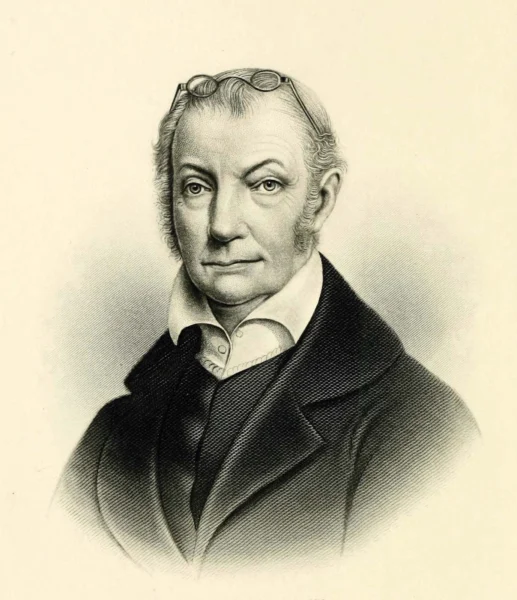
Aaron Burr based on NeemTime research
Who is Aaron Burr (Biography / Personal Details)
Aaron Burr was the third Vice President of the United States, but his extraordinary life ultimately became inseparable from the 1804 duel that killed Alexander Hamilton.
Born February 6, 1756, in Newark, New Jersey, Burr grew up in one of the most prominent intellectual and religious families of colonial America.
He served in the Continental Army during the American Revolution before building a legal and political career in New York.
Burr entered the U.S. Senate in 1791 and represented New York until 1797, establishing himself as a powerful Democratic-Republican politician.
In the disputed election of 1800, Burr tied Thomas Jefferson in electoral votes and briefly became a potential president before the House of Representatives selected Jefferson.
Jefferson became president and Burr served as vice president from 1801 to 1805, although their political relationship deteriorated.
In July 1804, Burr fatally wounded Hamilton in a duel following years of political hostility and personal conflict.
Two years later, Burr faced a treason trial connected with an alleged western political and territorial scheme but was acquitted in 1807.
He later returned to law and spent his final years in New York after years of European travel, financial difficulty and political exile.
Aaron Burr died on September 14, 1836, leaving behind one of the most complicated reputations of the American founding era.
Aaron Burr Height, Appearance, Fitness & How to Get a Body Like Aaron Burr
Aaron Burr did not have a modern officially measured celebrity-style height, but a nineteenth-century memoir described him as approximately 5 feet 6 inches tall.
The same historical description portrayed him as well formed, erect in posture and carrying a noticeably military bearing despite his relatively small stature.
Another historical description emphasized his high forehead, small hands and feet, prominent nose and generally compact physical appearance.
Burr’s military experience likely contributed to the disciplined posture and bearing repeatedly noted by people describing him later in life.
There is no reliable evidence documenting a structured modern-style workout routine, calorie plan or bodybuilding program followed by Burr.
His physical life instead belonged to an era when walking, horseback travel, military activity and ordinary daily exertion formed a much larger part of elite men’s routines.
Anyone seeking a historically inspired athletic physique should focus on functional strength, mobility, cardiovascular conditioning and healthy body composition rather than attempting to copy an undocumented routine.
Because Burr lived more than two centuries ago, modern claims about his exact weight, measurements or diet should be treated cautiously.
His relatively short stature also illustrates why historical descriptions should not automatically be converted into modern celebrity-style fitness statistics.
The most defensible physical description of Burr is therefore a compact, upright and military-looking man rather than a precisely measured modern fitness figure.
Aaron Burr Family
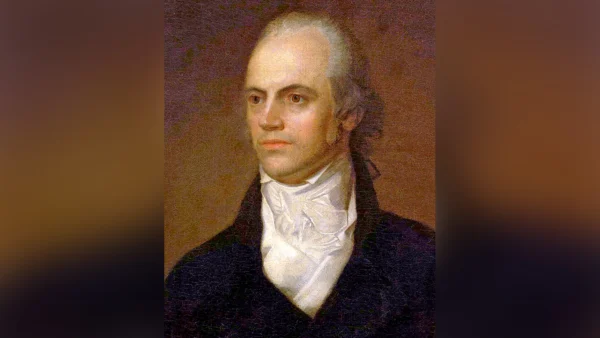
Aaron Burr Family 5
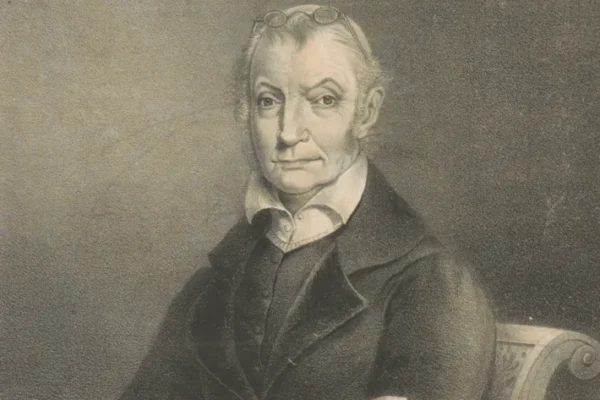
Aaron Burr Family 4
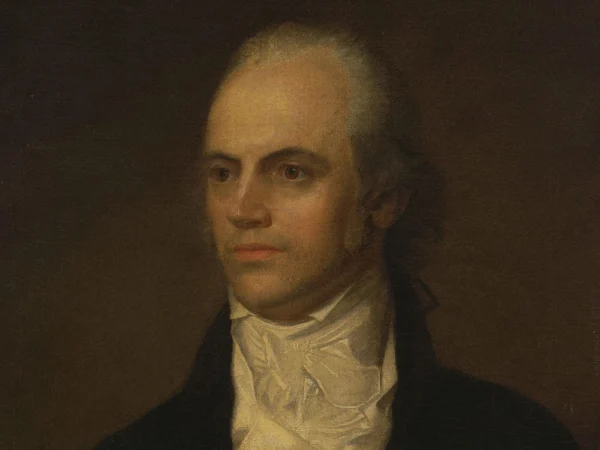
Aaron Burr Family 3
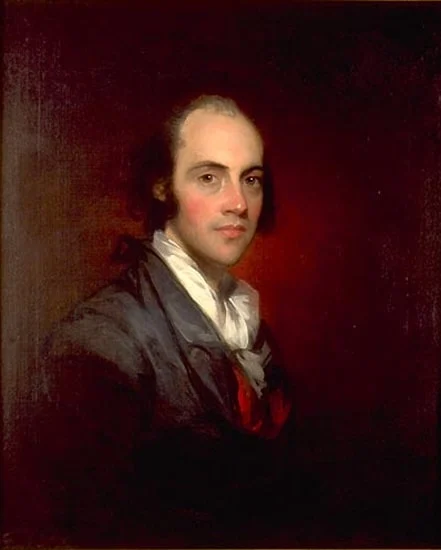
Aaron Burr Family 2
Aaron Burr Family
Early Life, Childhood, Education & Family Background of Aaron Burr
Aaron Burr’s childhood was marked by extraordinary family connections but also by the early loss of both parents before he reached the age of three.
His father, Aaron Burr Sr., was a prominent Presbyterian minister and president of the College of New Jersey, now Princeton University.
His maternal grandfather was Jonathan Edwards, one of the best-known preachers associated with the Great Awakening.
After his parents died, Burr and his sister were raised by their wealthy maternal uncle, Timothy Edwards.
Burr entered the College of New Jersey at only 13 years old, an extraordinary academic start even by eighteenth-century standards.
He graduated with honors in 1772 after completing his studies in only three years.
The American Revolution interrupted his early professional plans, and Burr joined the Continental Army in 1775.
His military service included participation in the difficult American campaign around Quebec and later service under George Washington’s revolutionary forces.
After leaving military service, Burr turned toward law and gained admission to practice in New York after successfully overcoming objections concerning his limited formal legal study.
That combination of exceptional education, early bereavement, military service and rapid professional advancement shaped the ambitious political figure who later entered the Senate and vice presidency.
Personal Life Highlights of Aaron Burr (Family Members)
Aaron Burr’s family story contains one of the most influential personal relationships in his life: his unusually close bond with his daughter, Theodosia Burr Alston.
Burr married Theodosia Prevost in 1782, and she brought children from her previous marriage into the household.
Their marriage produced one surviving child, Theodosia, born in 1783 and later married to South Carolina politician Joseph Alston.
Burr became deeply involved in his daughter’s education and intellectual development, and their correspondence remains an important source for understanding his private personality.
His daughter later suffered the death of her young son and disappeared at sea in 1813 while traveling aboard the Patriot.
Burr’s father, Aaron Burr Sr., had died when Burr was very young, leaving him without parental guidance during much of his childhood.
His sister Sally Burr Edwards was also raised alongside him after their parents’ deaths.
The family was connected to major religious and intellectual figures through both the Burr and Edwards lineages.
Burr’s later marriage to Eliza Jumel produced no children and became troubled, eventually ending in legal separation and divorce.
His family history therefore combined extraordinary intellectual connections, personal tragedy and relationships that continued to influence how historians interpret his private life.
Aaron Burr Partners, Relationships & Dating History
Aaron Burr’s first major documented relationship was with Theodosia Prevost, a French-speaking widow whom he met during the Revolutionary era.
Theodosia Prevost was the widow of Jacques Marcus Prevost, a British military officer, and Burr married her on July 2, 1782.
Their marriage lasted until her death in 1794 and produced their only surviving child, Theodosia Burr Alston.
Burr’s relationship with his daughter was exceptionally close, with surviving letters revealing a sustained intellectual and emotional connection.
After many years as a widower, Burr married wealthy New York socialite Eliza Jumel in 1833 when he was 77 years old.
The marriage deteriorated rapidly, and Jumel sought a divorce while Burr’s financial circumstances were deteriorating.
The divorce was finalized in 1836, shortly before Burr’s death.
Historical accounts contain numerous stories about Burr’s relationships with women, but many later anecdotes are difficult to separate from nineteenth-century gossip and political mythology.
The most securely documented marriages are therefore his relationships with Theodosia Prevost and Eliza Jumel.
Rather than relying on romantic legends surrounding Burr, his documented relationships reveal a man whose family attachments remained significant even as his political reputation collapsed.
Aaron Burr Career Journey, Breakthroughs, Achievements & Awards
Aaron Burr’s career moved remarkably from Revolutionary War officer to lawyer, senator, vice president and eventually one of the country’s most controversial political figures.
He joined the Continental Army in 1775 and gained a reputation for courage and ability during the American Revolution.
After the war, he established a successful legal practice and entered New York politics before winning election to the U.S. Senate in 1791.
Burr served one Senate term from 1791 to 1797 and became an important opponent of Alexander Hamilton’s financial program.
He became Thomas Jefferson’s running mate in the presidential election of 1800, when the Electoral College produced a tie between the two Democratic-Republicans.
The House of Representatives eventually selected Jefferson as president, leaving Burr as vice president.
As vice president, Burr presided over the Senate and was regarded by Senate historians as a skilled parliamentarian and effective presiding officer.
His attempt to become governor of New York failed in 1804, intensifying his conflict with Hamilton.
The Hamilton duel destroyed Burr’s political future, while the 1807 treason trial further damaged his reputation even though he was acquitted.
Burr never regained his earlier political influence, making his career a striking example of extraordinary advancement followed by an equally dramatic collapse.
Current Life Highlights of Aaron Burr (Career / Other Work)
Aaron Burr has no current personal career because he died in 1836, but his historical profile remains unusually active in modern culture.
His life continues to be studied through biographies, historical scholarship, archival collections and interpretations of the early American republic.
The Library of Congress preserves extensive historical material concerning Burr and his family, including papers connected with his daughter Theodosia.
His 1807 treason trial remains an important episode in discussions of constitutional definitions of treason and the limits of presidential-era political power.
The Burr-Hamilton duel also continues to receive attention because it illustrates the role of honor culture and political rivalry in the early United States.
His reputation has changed over time, with some modern historians examining Burr more critically than the traditional image of a simple villain.
The 2015 musical Hamilton dramatically expanded public interest in Burr by placing him at the center of the story rather than treating him as a peripheral historical figure.
As of September 2026, Broadway’s Hamilton continues to feature Aaron Burr as a central character, with Donald Webber Jr. currently playing the role.
The continuing production, historical scholarship and archival research mean Burr remains culturally relevant nearly two centuries after his death.
Aaron Burr Most Popular Movies, TV Shows, Media Appearances & Other Work
Aaron Burr himself never appeared in modern movies or television because he died in the nineteenth century, but his life has inspired extensive screen and stage portrayals.
PBS’s American Experience documentary The Duel examined the events surrounding the Burr-Hamilton confrontation and its aftermath.
The 2015 Broadway musical Hamilton transformed Burr into one of its principal characters, with Leslie Odom Jr. originating the role.
Odom’s performance became one of the production’s most acclaimed elements and earned him the Tony Award for Best Actor in a Musical.
Hamilton was later filmed during live Broadway performances and released as a 2020 film, allowing a global audience to experience the stage portrayal.
The production presents Burr through songs and dramatic scenes that blend documented history with theatrical storytelling.
Gore Vidal’s 1973 novel Burr also placed the historical figure at the center of a fictionalized examination of his life.
Historical television programs have repeatedly returned to Burr because his duel, vice presidency and treason trial provide unusually dramatic material.
In 2026, Donald Webber Jr. is playing Burr on Broadway and has discussed the unusual experience of portraying both Burr and Hamilton during his career with the production.
These portrayals have made Burr one of the most recognizable American historical figures in contemporary theater even though his original political career ended more than two centuries ago.
Aaron Burr Most Popular News, Controversies, Career Debates & What Makes Them Unique
The event that permanently defined Aaron Burr’s public image was his July 11, 1804 duel with Alexander Hamilton.
Hamilton was fatally wounded during the encounter, and Burr subsequently faced murder indictments in New York and New Jersey.
Burr nevertheless completed his vice-presidential term and delivered his farewell address to the Senate in March 1805 while under indictment.
His later involvement in a western territorial scheme produced an even greater political crisis.
Burr was accused of attempting to organize territory into an independent political entity, leading to his 1807 treason trial before Chief Justice John Marshall.
The court acquitted him because prosecutors failed to establish the constitutionally required overt act of treason.
Although the acquittal protected Burr from a treason conviction, the controversy effectively destroyed his national political career.
A continuing historical debate concerns whether Burr should be remembered primarily as a reckless political conspirator or as a more complex politician whose reputation was shaped by powerful enemies and later mythology.
His Senate record also complicates the popular image because he was regarded as an effective presiding officer despite becoming one of the era’s most controversial political figures.
That contrast between capable public service, political ambition, personal rivalry and spectacular downfall is what makes Burr unusually compelling to historians and audiences.
Aaron Burr Known Unknown Facts, Trivia + People Also Ask / Search & Answers
One surprising fact is that Burr entered the College of New Jersey at just 13 and graduated with honors after only three years.
His father had been president of the same institution, creating a remarkable educational connection between father and son.
Burr’s maternal grandfather was Jonathan Edwards, one of the most influential preachers of eighteenth-century New England.
He became a lawyer despite having completed only a relatively short period of formal legal study before successfully passing an examination for admission.
Burr’s daughter Theodosia became a significant figure in her own right and married South Carolina politician Joseph Alston.
Was Aaron Burr a U.S. president? No, Burr was the third Vice President of the United States under President Thomas Jefferson and never became president.
Did Aaron Burr really kill Alexander Hamilton? Yes, Burr fatally wounded Hamilton in their July 1804 duel, although Burr was never convicted of murder.
Why was Aaron Burr tried for treason? He was accused of organizing a western territorial scheme that prosecutors argued threatened the United States, but he was acquitted in 1807.
How tall was Aaron Burr? A historical memoir described Burr as approximately 5 feet 6 inches tall, although this is not a modern standardized measurement.
Why is Aaron Burr famous today? His historical reputation rests on his vice presidency, rivalry with Hamilton, the fatal duel, the 1807 treason trial and his continuing portrayal in Hamilton.