Milkha Singh based on NeemTime research
Who Is Milkha Singh (Biography / Personal Details)
Milkha Singh, famously known as the Flying Sikh, rose from the trauma of Partition to become one of India’s most celebrated track athletes.
Born on 20 November 1929, according to widely published biographical accounts, he became a symbol of determination, discipline and national pride.
His life changed dramatically after he joined the Indian Army, where structured training helped him discover his extraordinary running ability.
Singh specialised in the 400 metres, an event demanding a rare combination of speed, endurance and tactical judgment.
He represented India at the 1956 Melbourne Olympics, the 1960 Rome Olympics and the 1964 Tokyo Olympics.
His fourth-place finish in the 400 metres final at Rome in 1960 remains one of the most famous near-misses in Indian Olympic history.
Although he narrowly missed an Olympic medal, his performances helped raise the profile of Indian athletics internationally.
He won gold medals at the 1958 Asian Games and the 1958 British Empire and Commonwealth Games.
His nickname, the Flying Sikh, became inseparable from his public identity after his performances impressed audiences across South Asia.
Milkha Singh died on 18 June 2021 in Chandigarh, leaving behind a sporting legacy that continues to inspire generations.
Milkha Singh Height, Appearance, Fitness & How to Get a Body Like Milkha Singh
Milkha Singh’s athletic physique was built around the demands of competitive sprinting rather than bodybuilding or appearance.
His height is commonly reported as approximately 5 feet 10 inches, or 178 centimetres, although a definitive official measurement is not consistently documented in reliable public biographies.
He was known for a lean, muscular build suited to the explosive acceleration and sustained speed required in the 400 metres.
His long stride, powerful leg drive and disciplined running technique were central features of his racing style.
The 400 metres requires athletes to balance speed with endurance because running too aggressively early can undermine performance in the final stretch.
Singh’s training in the Indian Army helped establish the disciplined routine that became central to his athletic development.
His career demonstrates the value of consistent practice, physical conditioning, recovery and technical improvement.
Anyone seeking a similar athletic build can begin with a balanced programme combining running, strength training, mobility work and adequate rest.
Training should be adapted to individual fitness, age and health rather than copying the workload of an elite athlete from another era.
There is no reliable basis for claiming that Singh followed a particular modern diet or bodybuilding routine, so his legacy is best understood through his documented commitment to running.
Milkha Singh Family
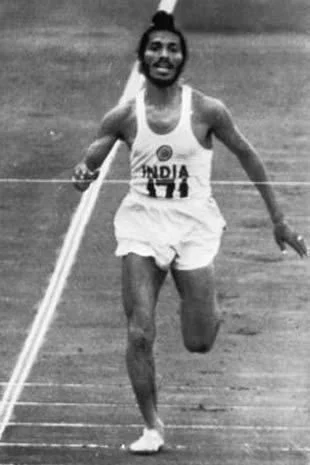
Milkha Singh Family 5
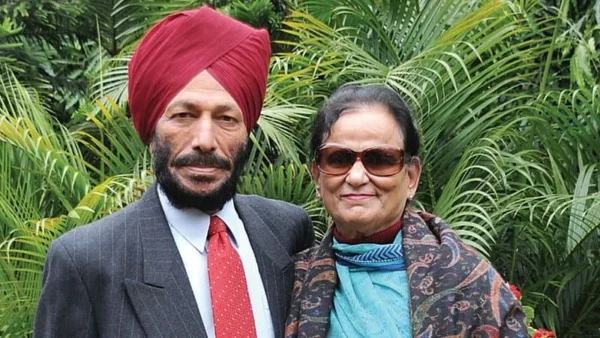
Milkha Singh Family 4
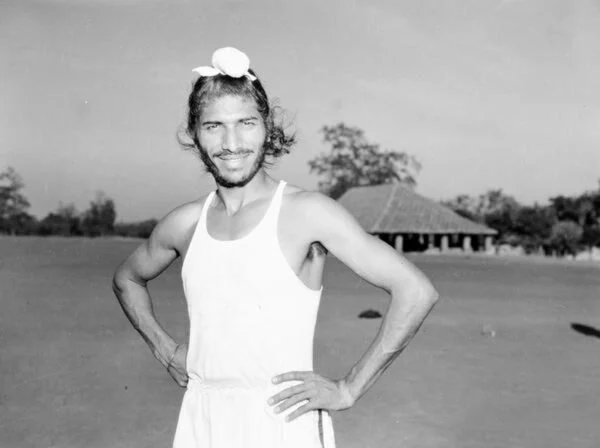
Milkha Singh Family 3
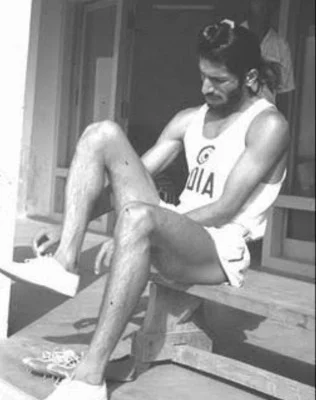
Milkha Singh Family 2
Milkha Singh Family
Early Life, Childhood, Education & Family Background of Milkha Singh
Milkha Singh’s early life was shaped by poverty, family tragedy and the upheaval surrounding the Partition of British India in 1947.
He was born in the village of Govindpura, then in the Muzaffargarh district of British India, an area that is now in Pakistan.
He grew up in a large family in a rural setting where daily life demanded physical effort and resilience.
During Partition, communal violence devastated his family, and several of his relatives were killed.
Singh later recounted the trauma of witnessing violence and losing family members during that period.
He escaped to India after the upheaval, facing displacement and uncertainty while trying to rebuild his life.
His early education was interrupted by the circumstances of his childhood, and public biographies provide limited consistent detail about formal qualifications.
As a young man, he struggled to find stability and was at one point involved in petty theft, a difficult period he later discussed openly.
His attempts to enter the Indian Army initially failed before he eventually secured recruitment in 1952.
Military life introduced him to organised athletics and gave him access to training that transformed his natural speed into a competitive skill.
Personal Life Highlights of Milkha Singh (Family Members)
Behind Milkha Singh’s public image as a relentless athlete was a family life that remained important throughout his later years.
He married Nirmal Kaur, a former captain of India’s women’s volleyball team, in 1962.
Their marriage brought together two people who understood the discipline, travel and pressures associated with representing India in sport.
The couple had three daughters and one son, golfer Jeev Milkha Singh.
Jeev later established an international career in professional golf, making him one of India’s best-known golfers.
Milkha and Nirmal supported their son’s sporting ambitions while maintaining a family connection to competitive athletics.
Nirmal Kaur also served as director of sports for women in the Punjab education department, according to published biographies.
The family experienced public attention because of Milkha’s fame, but they generally kept many private matters away from the spotlight.
Nirmal died in June 2021, just days before Milkha, after complications associated with COVID-19.
Their deaths within the same week marked a deeply painful moment for their family and for admirers who had followed their lives.
Milkha Singh Partners, Relationships & Dating History
Milkha Singh’s best-documented long-term relationship was his marriage to Nirmal Kaur, the former Indian women’s volleyball captain.
The couple married in 1962 and remained together for nearly six decades.
Their shared background in competitive sport gave them a common understanding of training, travel and the demands of public life.
Unlike many modern celebrities, Singh did not build a public profile around a stream of reported romantic relationships.
Reliable biographies generally focus on his marriage and family rather than documenting other partners.
There is no strong, consistently corroborated public record establishing a series of additional romantic relationships.
Stories about Singh’s encounters and friendships during international sporting tours sometimes appear in retellings of his life, but anecdotes should not automatically be treated as evidence of a relationship.
His own public narrative focused far more on Partition, military service, athletic ambition and national representation than on dating.
Nirmal’s sporting career was significant in its own right, and their marriage connected two figures from India’s sporting community.
Their relationship is best described through the documented facts of their marriage and family life, rather than unverified gossip.
Milkha Singh Career Journey, Breakthroughs, Achievements & Awards
Milkha Singh’s rise from a refugee struggling to rebuild his life to an international athletics champion began after he joined the Indian Army in 1952.
Military training exposed his running talent, and he developed through demanding daily workouts and competition against other servicemen.
At the 1956 Melbourne Olympics, he gained international experience but failed to advance beyond the early rounds in his individual events.
Rather than accept the disappointment, he studied elite runners and intensified his training, turning that first Olympic setback into motivation.
His breakthrough arrived at the 1958 Asian Games in Tokyo, where he won gold medals in both the 200 metres and 400 metres.
That same year, he won the 440-yard race at the British Empire and Commonwealth Games in Cardiff, becoming the first Indian man to win an individual athletics gold there.
At the 1960 Rome Olympics, he finished fourth in the 400 metres with a time of 45.73 seconds, then an Indian national record.
He returned to the Asian Games in 1962 and won gold in the 400 metres and the 4 × 400 metres relay.
Singh received the Padma Shri in 1959 in recognition of his contribution to Indian sport.
His combination of international victories, national records and perseverance made him a foundational figure in India’s modern athletics history.
Current Life Highlights of Milkha Singh (Career / Other Work)
Milkha Singh died on 18 June 2021 in Chandigarh, so his current influence is best understood through the institutions, stories and athletes carrying his legacy forward.
His final years included public appearances, interviews and efforts to encourage young people to pursue sport with discipline.
In 2003, he established the Milkha Singh Charitable Trust to support underprivileged athletes and people in need.
He also became a prominent voice on Indian athletics, speaking about training, commitment and the need for better opportunities for emerging competitors.
His 2013 autobiography, The Race of My Life, introduced his personal account of Partition, military service and sporting achievement to a new generation of readers.
The book also became the foundation for a major Hindi-language film that brought his life story to a much wider audience.
His son, Jeev Milkha Singh, continued the family’s sporting association through an international professional golf career.
After Milkha’s death, tributes from athletes, political leaders and sporting organisations highlighted his lasting importance to India.
His story continues to feature in discussions about Olympic ambition, athletic preparation and the growth of Indian sport.
Although he never won an Olympic medal, his legacy remains defined by the barriers he broke and the inspiration he gave to future competitors.
Milkha Singh Most Popular Movies, TV Shows, Media Appearances & Other Work
The most influential screen portrayal of Milkha Singh’s life is Bhaag Milkha Bhaag, the 2013 Hindi biographical sports drama directed by Rakeysh Omprakash Mehra.
Farhan Akhtar played Singh, undergoing intensive physical preparation to portray the athlete’s distinctive running style and powerful build.
The film follows Singh’s traumatic childhood during Partition, his recruitment into the Army and his rise as an international sprinter.
Its title draws on the desperate command associated with his father’s final moments during the violence of Partition.
The production brought his fourth-place finish at the 1960 Rome Olympics to audiences who may not have known the details of his sporting career.
Sonam Kapoor appeared as Biro, a character whose relationship with Singh adds a personal dimension to the film’s larger sporting narrative.
The film received widespread attention and several awards, while Farhan Akhtar’s performance earned particular praise.
Singh and his family were involved in discussions around the project, and the film drew heavily on his autobiography, The Race of My Life.
His life has also been revisited through television interviews, news documentaries, sports retrospectives and commemorative programmes.
Together, these appearances transformed Singh from a celebrated athlete into a familiar cultural figure whose story reaches far beyond athletics fans.
Milkha Singh Most Popular News, Controversies, Career Debates / Why Milkha Singh Is Popular
Milkha Singh’s most enduring public debate centres on his fourth-place finish in the 400 metres final at the 1960 Rome Olympics.
He was considered a serious medal contender, but a change in pace during the race affected his rhythm as rivals moved ahead.
American runner Otis Davis won gold, while Germany’s Carl Kaufmann took silver and South Africa’s Malcolm Spence claimed bronze.
Singh later described his decision to slow down as a major tactical mistake, making the race a lasting personal regret.
His time of 45.73 seconds became an Indian national record that remained unbroken for nearly four decades.
Another defining story came in 1960, when he raced Pakistan’s celebrated sprinter Abdul Khaliq in Lahore and won the 200 metres contest.
Pakistan’s President, General Ayub Khan, is widely credited with giving Singh the nickname the Flying Sikh after that victory.
The contrast between his painful childhood during Partition and his later reception in Pakistan made the episode especially memorable.
The 2013 film Bhaag Milkha Bhaag renewed public interest in his life, although, like many biographical dramas, it presents selected events through cinematic storytelling.
Singh remains popular because his legacy combines elite sporting achievements with a personal history of survival, self-discipline and resilience.
Milkha Singh Known Unknown Facts, Trivia + People Also Ask / Search & Answers
Milkha Singh’s international career began with a disappointing Olympic debut at Melbourne in 1956, making his rapid improvement over the next two years especially remarkable.
He won four Asian Games gold medals across the 1958 and 1962 editions, in the 200 metres, 400 metres and 4 × 400 metres relay.
His 1958 Commonwealth victory was in the 440 yards, a distance slightly longer than the modern 400 metres.
He reportedly trained for several hours daily, combining cross-country running with repeated track efforts to develop stamina and speed.
His autobiography, The Race of My Life, was published in 2013 and helped bring his personal account to a broad readership.
His son, Jeev Milkha Singh, became a professional golfer and joined the European Tour in 1998.
Singh established a charitable trust in 2003 to help underprivileged sportspeople and others in need.
He was honoured with the Padma Shri in 1959, one of India’s major civilian awards.
Why was Milkha Singh called the Flying Sikh? The nickname is widely attributed to Pakistan’s President Ayub Khan after Singh defeated Abdul Khaliq in Lahore in 1960.
Did Milkha Singh win an Olympic medal? No, he finished fourth in the 400 metres final at the 1960 Rome Olympics, narrowly missing the podium.