Adi Shankaracharya based on NeemTime research
Who is Adi Shankaracharya (Biography / Personal Details)
Adi Shankaracharya is remembered as one of India’s most influential philosophers, yet even the exact dates of his short life remain debated.
He is best known for systematizing Advaita Vedanta, a non-dual philosophical tradition centred on the relationship between Atman and Brahman.
Modern scholarship generally places Shankara in the eighth century CE, although several monastic traditions assign him much earlier dates.
The commonly cited traditional chronology of 788–820 CE is therefore useful but should not be treated as historically certain.
He was born at Kaladi in present-day Kerala and became a renunciant while still very young.
His teacher was Govinda Bhagavatpada, through whom Shankara was connected to the earlier Advaita teacher Gaudapada.
Shankara travelled extensively across the Indian subcontinent, teaching, debating philosophers and composing influential commentaries.
His surviving works include major commentaries on the Brahma Sutras, Bhagavad Gita and principal Upanishads.
Tradition also credits him with establishing or organising important monastic centres that later became associated with the four major Shankaracharya lineages.
Although his historical life is difficult to reconstruct, his philosophical influence has continued for more than a millennium.
Adi Shankaracharya Height, Appearance, Fitness & How to Get a Body Like Adi Shankaracharya
There is no historically reliable record of Adi Shankaracharya’s height, weight or precise physical appearance.
Because Shankara lived more than a thousand years ago, modern measurements sometimes published online are estimates rather than documented facts.
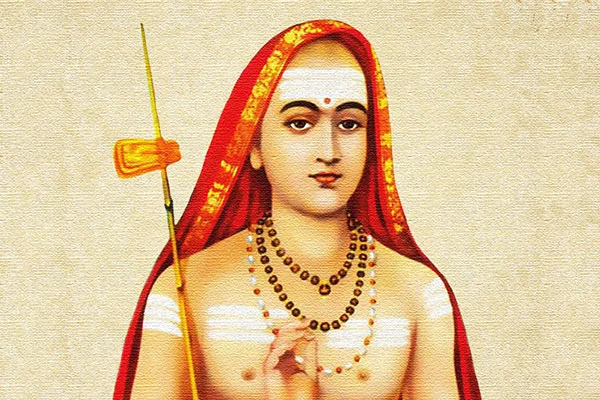
Paintings and statues depicting him were created many centuries after his lifetime and therefore cannot establish his actual appearance.
Traditional accounts portray him as a young ascetic who travelled extensively while teaching philosophy and debating scholars.
His life as a renunciant was associated with simplicity, discipline, study and detachment rather than physical fitness as understood today.
No trustworthy historical source records a gym routine, bodybuilding programme, calorie plan or specific exercise schedule followed by Shankara.
Readers seeking a healthy physique inspired by an ascetic lifestyle should focus on sustainable exercise, nutritious food, adequate sleep and overall physical conditioning.
Walking, mobility exercises, strength training and cardiovascular activity can provide a practical modern routine without pretending to reproduce Shankara’s historical life.
A balanced diet should be based on individual nutritional needs rather than an invented diet attributed to an ancient philosopher.
The most historically defensible description is therefore one of disciplined scholarship and monastic simplicity, not a measurable celebrity-style physique.
Adi Shankaracharya Family
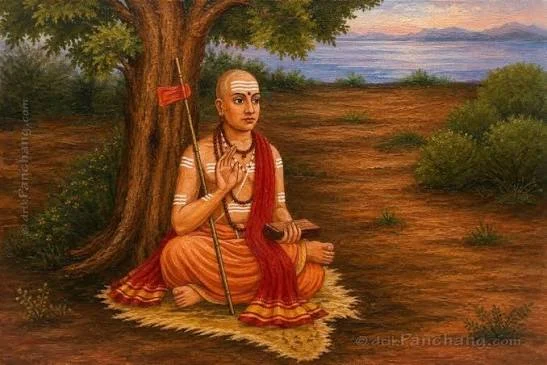
Adi Shankaracharya Family 5
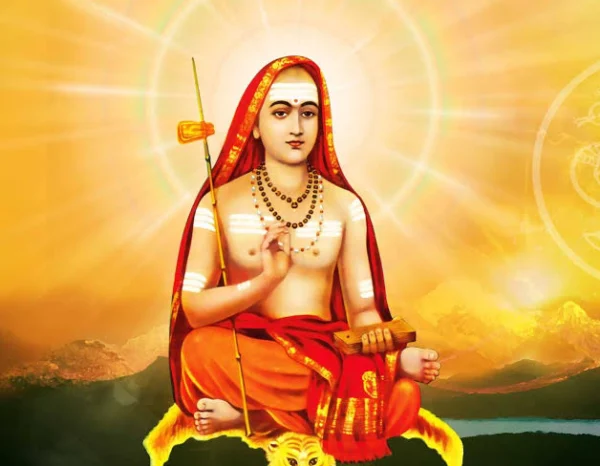
Adi Shankaracharya Family 4
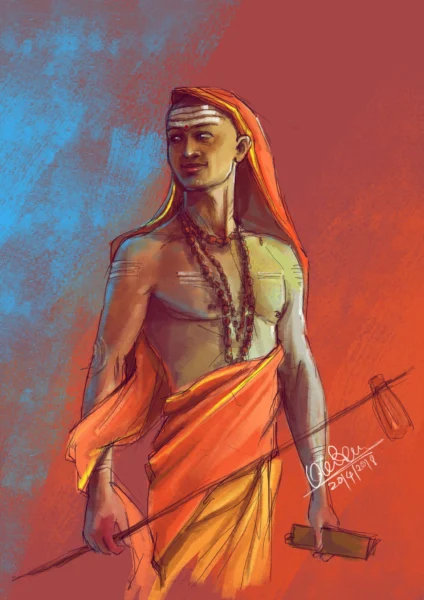
Adi Shankaracharya Family 3
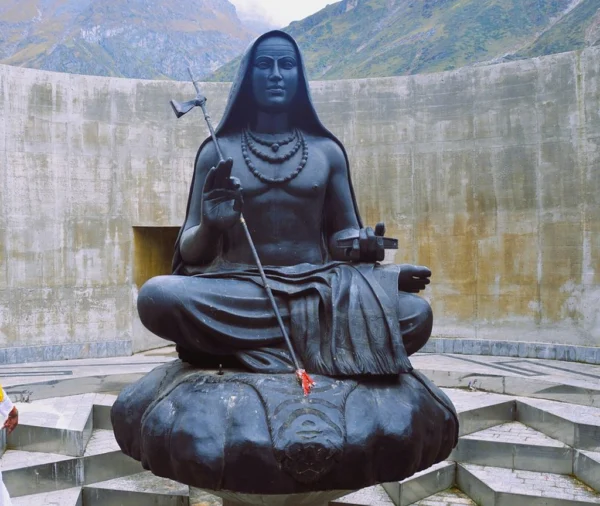
Adi Shankaracharya Family 2
Adi Shankaracharya Family
Early Life, Childhood, Education & Family Background of Adi Shankaracharya
Adi Shankaracharya was born at Kaladi, a village on the banks of the Periyar River in present-day Kerala.
Traditional biographies identify his father as Sivaguru and his mother as Aryamba, members of a Nambudiri Brahmin family.
His father is described as a learned man who died while Shankara was still a child.
Aryamba subsequently played an important role in raising and educating her exceptionally gifted son.
Traditional accounts say Shankara demonstrated remarkable memory and intellectual ability from an unusually young age.
He received the sacred-thread ceremony and began formal Vedic learning while still a child.
Accounts of his education describe study of the Vedas, Vedangas, scriptures, philosophy and other branches of traditional learning.
He eventually left home to pursue the life of a renunciant, a decision that became central to later biographies of his life.
Shankara travelled north and eventually met Govinda Bhagavatpada, who became his teacher and initiated him into the monastic tradition.
The combination of early scholarship, renunciation and extensive travel shaped the intellectual career for which he became famous.
Personal Life Highlights of Adi Shankaracharya (Family Members)
Adi Shankaracharya’s personal life was fundamentally different from that of modern public figures because he became a celibate renunciant at a young age.
His parents are traditionally identified as Sivaguru and Aryamba, who are central figures in accounts of his childhood.
Shankara is generally described as their only child, although details vary between later traditional narratives.
His father’s early death reportedly left Aryamba responsible for much of his upbringing and education.
One of the best-known traditions concerns Shankara’s promise to his mother to return to her when she was nearing death.
Accounts say he eventually returned to Kaladi and performed her final rites despite opposition from local orthodox opinion.
This episode became an important part of the tradition surrounding his relationship with his mother.
Shankara did not marry and left no historically documented biological children.
His closest personal relationships therefore centred on his teachers, disciples and the wider monastic community rather than a spouse or descendants.
Among his celebrated disciples were Padmapada, Sureshvara, Totakacharya and Hastamalaka, whose names remain important in Advaita traditions.
Adi Shankaracharya Partners, Relationships & Dating History
There is no reliable historical evidence that Adi Shankaracharya had a spouse, romantic partner or conventional dating history.
He became a renunciant while very young and is traditionally remembered as having followed a life of celibacy.
His commitment to monastic discipline made marriage and romantic relationships incompatible with the path he chose.
Later biographies sometimes contain dramatic episodes involving women, kings and philosophical challenges, but these stories belong to hagiographical traditions rather than modern relationship records.
One famous narrative concerns Ubhaya Bharati, the highly learned wife of the philosopher Mandana Mishra.
According to tradition, she acted as judge during Shankara’s philosophical debate with Mandana Mishra and later challenged Shankara on subjects associated with household life.
The story is also linked to the extraordinary legend that Shankara temporarily entered the body of a deceased king to gain knowledge about subjects unfamiliar to a celibate monk.
Historians generally treat such supernatural episodes cautiously because the detailed biographies were written centuries after Shankara’s lifetime.
There is consequently no verified dating history comparable to what exists for modern celebrities.
The historically defensible picture is of a lifelong renunciant whose major personal commitments were to spiritual study, teaching, debate and monastic discipline.
Adi Shankaracharya Career Journey, Breakthroughs, Achievements & Awards
Shankara’s extraordinary intellectual career began unusually early and developed through study, renunciation, travel and philosophical debate.
After becoming a disciple of Govinda Bhagavatpada, he travelled to major centres of learning and began developing the Advaita Vedanta system associated with his name.
His commentaries on the Brahma Sutras, Bhagavad Gita and principal Upanishads became the foundation of his enduring philosophical reputation.
Rather than inventing Advaita from nothing, modern scholarship generally describes Shankara as a major systematizer of an already developing non-dual tradition.
He engaged with rival philosophical schools, including Buddhist and Mimamsa thinkers, while defending his interpretation of the Upanishadic tradition.
Tradition particularly celebrates his debate with Mandana Mishra, although the details come mainly from later hagiographies.
Shankara also taught disciples who became important figures in the subsequent development of Advaita Vedanta.
Four major monastic centres at Sringeri, Puri, Dvaraka and Jyotirmath are traditionally associated with his organisational legacy.
He received no modern-style competitive awards because such institutions did not exist during his lifetime.
His enduring honorifics, including Jagadguru, instead reflect the extraordinary religious and intellectual status he acquired within later Hindu traditions.
Current Life Highlights of Adi Shankaracharya (Career / Other Work)
Adi Shankaracharya has no current personal career because he was a historical philosopher who lived more than a millennium ago.
His ideas, however, remain active through Advaita Vedanta teaching institutions, monasteries, scholars and spiritual teachers around the world.
The four major Shankaracharya lineages associated with Sringeri, Puri, Dvaraka and Jyotirmath continue to operate as living religious institutions.
Modern Advaita teachers regularly study and interpret Shankara’s commentaries on the Upanishads, Bhagavad Gita and Brahma Sutras.
His philosophical approach remains particularly influential in discussions of consciousness, selfhood, ultimate reality and liberation.
Kaladi in Kerala has become an important pilgrimage destination associated with his birth and early life.
Kedarnath and other places connected with his traditional life story are also associated with his memory and legacy.
Statues, temples, educational programmes and cultural institutions across India continue to commemorate him.
His works are also studied in universities and departments concerned with Indian philosophy, comparative religion and Sanskrit studies.
Thus, although Shankara has no present-day career, his intellectual tradition remains a living part of Indian religious and philosophical life.
Adi Shankaracharya Most Popular Movies, TV Shows, Media Appearances & Other Work
Adi Shankaracharya has no personal film or television career because he lived centuries before modern mass media existed.
His life has nevertheless inspired several Indian films, documentaries, television programmes and cultural productions.
The most historically significant cinematic portrayal is G. V. Iyer’s 1983 Sanskrit film Adi Shankaracharya.
Starring Sarvadaman Banerjee, the film dramatized Shankara’s life and philosophical mission and became notable as India’s first feature film made entirely in Sanskrit.
The production won four National Film Awards, including Best Film, Best Screenplay, Best Cinematography and Best Audiography.
A Malayalam film titled Jagadguru Aadisankaran was released in 1977 and portrayed Shankara during both childhood and adulthood.
The Telugu biographical film Jagadguru Adi Shankara appeared in 2013 under the direction of J. K. Bharavi.
Modern documentaries and television programmes frequently revisit his journeys, debates, teachings and connection with the four monastic centres.
His story has also been represented through stage productions, devotional programmes, books and animated educational material.
Among all these adaptations, the 1983 Sanskrit film remains particularly important because its language and subject directly connected cinema with classical Indian philosophical heritage.
Adi Shankaracharya Most Popular News, Controversies, Career Debates / Why Adi Shankaracharya Is Popular
The biggest debate surrounding Adi Shankaracharya is surprisingly basic: historians still disagree about exactly when he lived.
The traditional monastic chronologies can place him centuries earlier than the dates preferred by much modern historical scholarship.
The widely cited 788–820 CE chronology remains common, while other scholars have proposed dates ranging from earlier centuries to different periods of the eighth century.
A 2024 scholarly study even argued for a fifth-century BCE dating, demonstrating that the question remains contested rather than settled.
Another important debate concerns how many works can genuinely be attributed to Shankara because hundreds of texts have traditionally carried his name.
The Stanford Encyclopedia of Philosophy notes that authorship of many works attributed to him is questionable, particularly texts associated with later monastic heads.
Historians also distinguish between Shankara as the systematizer of Advaita Vedanta and the broader traditional claim that he founded the entire school.
The traditional attribution of the four major monasteries to Shankara is likewise discussed differently in historical scholarship and religious tradition.
His popularity ultimately comes from the remarkable combination of philosophical influence, short traditional lifespan, extensive journeys and enduring monastic legacy.
Adi Shankaracharya Known Unknown Facts, Trivia + People Also Ask / Search & Answers
One of the most surprising facts about Shankara is that the traditional accounts say he achieved an extraordinary amount of intellectual work during a life of only 32 years.
Why is Adi Shankaracharya famous? He is famous primarily for systematizing Advaita Vedanta and producing influential commentaries on major Hindu philosophical texts.
When was Adi Shankaracharya born? The answer is disputed, with traditional institutions giving different dates and modern scholarship generally placing him in the early medieval period.
Where was Adi Shankaracharya born? He is traditionally associated with Kaladi in present-day Kerala, near the Periyar River.
Who was Adi Shankaracharya’s guru? His principal teacher was Govinda Bhagavatpada, who is traditionally linked to the earlier Advaita teacher Gaudapada.
What is Advaita Vedanta? It is a non-dual philosophical tradition that teaches that the deepest self, Atman, is ultimately identical with Brahman.
Did Adi Shankaracharya get married? No reliable historical evidence indicates that he married, and tradition consistently presents him as a celibate renunciant.
How long did Adi Shankaracharya live? Traditional biographies commonly say he lived for 32 years, although the historical details of his death are uncertain.
What did Adi Shankaracharya write? His best-established works include commentaries on the Brahma Sutras, Bhagavad Gita and principal Upanishads, while many other attributed works have disputed authorship.
Why is Adi Shankaracharya still important today? His philosophy continues to shape Advaita Vedanta teaching, monastic institutions, Indian intellectual history and contemporary discussions about consciousness and reality.