Abid Ali based on NeemTime research
Who is Abid Ali (Biography / Personal Details)
Abid Ali was one of Pakistan’s most respected television actors, remembered especially for giving powerful performances to morally complex and emotionally intense characters.
Born in Quetta in 1952, he entered entertainment through Radio Pakistan before moving to Lahore and pursuing television acting.
His breakthrough arrived with PTV’s Jhok Sial in 1973, establishing him during the formative years of Pakistani television drama.
He became nationally famous as Dilawar Khan in the classic PTV serial Waris, a performance that remains central to his legacy.
Across a career spanning more than four decades, Ali worked in hundreds of television productions and more than 200 films.
He was not limited to acting and later became a director and producer, expanding his influence behind the camera.
His 1993 drama Dasht was particularly significant because it helped establish private television production on a larger scale in Pakistan.
The same year, he directed Doosra Aasman, associated with the early history of Pakistani dramas filmed outside the country.
Ali received the Nigar Award for Best Actor for Hazaron Raaste and was also honoured with Pakistan’s Pride of Performance.
He died in Karachi on September 5, 2019, aged 67, leaving behind a body of work that continues to be revisited by Pakistani television audiences.
Abid Ali Height, Appearance, Fitness & How to Get a Body Like Abid Ali
Abid Ali was commonly listed at around 5 feet 10½ inches, or approximately 179 centimetres, although published celebrity measurements should be treated as reported rather than officially certified.
His tall frame and commanding screen presence helped him project authority in serious dramatic roles.
Unlike many contemporary celebrities, his public image was built more around acting ability and characterisation than physical fitness or fashion.
Photographs from his active years show a relatively lean build that suited both television drama and film work.
There is no reliable public record establishing his exact weight, body-fat percentage or a detailed personal fitness programme.
There is also no dependable evidence that he followed a particular celebrity diet or specialised bodybuilding routine.
Anyone seeking a similar healthy physique should concentrate on regular physical activity, sensible strength work, balanced nutrition and adequate recovery.
For an older adult, exercise should also be adapted to age, fitness level and medical needs rather than copied from historical photographs of an actor.
Ali’s screen presence demonstrates that posture, voice, facial expression and acting technique can contribute as much to a commanding appearance as physical size.
Because he died in 2019, claims about a specific current body measurement or fitness routine should not be presented as established fact.
Abid Ali Family
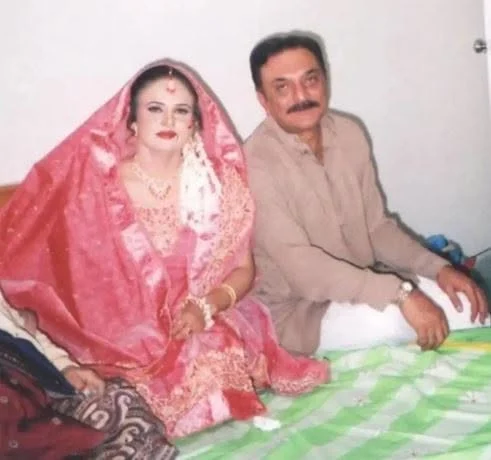
Abid Ali Family 5
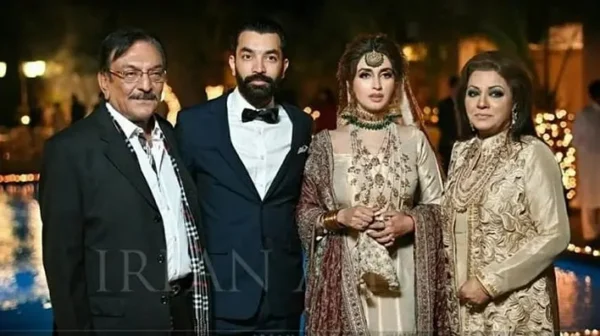
Abid Ali Family 4
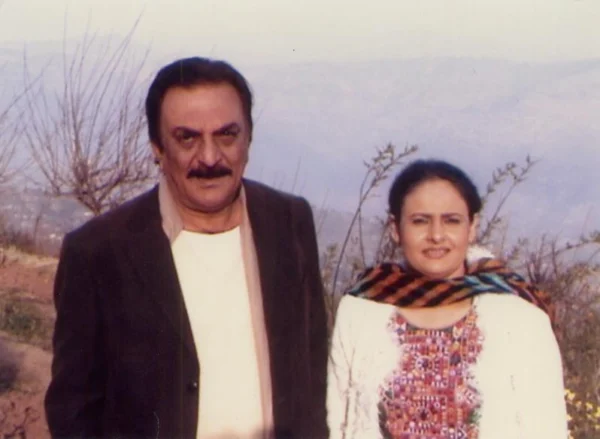
Abid Ali Family 3
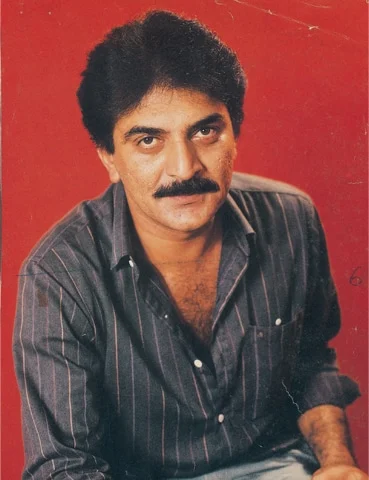
Abid Ali Family 2
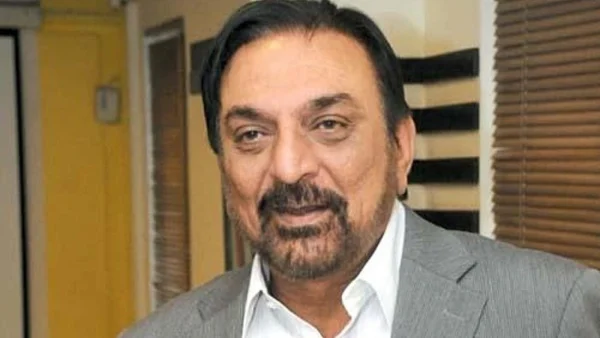
Abid Ali Family
Early Life, Childhood, Education & Family Background of Abid Ali
Abid Ali was born and educated in Quetta, where his early interests already pointed toward creative work rather than a conventional entertainment career.
As a child and teenager, he reportedly enjoyed writing stories and painting, showing an artistic inclination before he entered professional acting.
While studying at college in Quetta during the late 1960s, he was noticed by radio personality and poet Ata Shad.
Shad encouraged him to audition for Radio Pakistan because of his distinctive and suitable voice.
Ali passed the audition and began working in radio while continuing his education, giving him his first professional experience in broadcasting.
Radio taught him valuable skills in voice control, timing and communication before he ever became a familiar television face.
After completing his college education, he moved from Quetta to Lahore in 1973 to pursue opportunities at Pakistan Television.
The move was not immediately easy, and he reportedly went through repeated auditions before securing television work.
His first major television opportunity came through Jhok Sial, which launched his long association with PTV drama.
That early combination of writing, painting, radio and acting helps explain why Ali eventually developed into not only an actor but also a director and producer.
Personal Life Highlights of Abid Ali (Family Members)
Abid Ali’s family became part of Pakistan’s entertainment history because several of his children also entered the creative industries.
He was first married to actress and singer Humaira Ali, with whom he had three daughters.
His daughters include actress and model Iman Ali, actress and singer Rahma Ali and Maryam Ali.
Iman Ali later became a prominent Pakistani model and actress, particularly recognised for films such as Khuda Kay Liye and Mah-e-Mir.
Rahma Ali also pursued acting and singing, continuing the family’s connection with Pakistani entertainment.
Ali and Humaira eventually separated, and their personal circumstances later became a subject of public discussion through interviews involving their daughters.
He subsequently married actress Rabia Noreen, making his second marriage another connection between his personal and professional worlds.
Noreen had her own established television career and appeared in numerous Pakistani dramas over several decades.
Ali’s family therefore included several people who understood the pressures and opportunities of working in the entertainment industry.
Despite his fame, much of the family’s private life remained outside regular media coverage, and the most reliable public record concerns his marriages, daughters and their professional careers.
Abid Ali Partners, Relationships & Dating History
Abid Ali’s publicly documented relationship history is principally associated with his two marriages rather than a long list of celebrity romances.
His first wife was Humaira Ali, an actress and singer who also worked in Pakistani entertainment.
The couple had three daughters, Iman Ali, Rahma Ali and Maryam Ali, before their marriage eventually ended in separation.
Their family remained connected to show business, with both Iman and Rahma later establishing careers in entertainment.
Ali subsequently married actress Rabia Noreen, another established figure in Pakistani television.
Their marriage took place in the mid-2000s, with public sources commonly placing it around 2006.
Noreen continued working as an actress after their marriage and was known for roles in numerous television dramas.
Unlike many contemporary celebrity profiles, there is little reliable evidence of a succession of publicly confirmed relationships involving Ali outside his two marriages.
His relationship with Humaira also became relevant to later discussions involving their daughters and family dynamics.
Ali remained married to Rabia Noreen until his death in Karachi in September 2019, and no reliable evidence indicates another publicly confirmed partner afterward.
Abid Ali Career Journey, Breakthroughs, Achievements & Awards
Abid Ali’s career began in radio but quickly developed into one of the longest-running acting careers in Pakistani television and film.
His 1973 appearance in Jhok Sial gave him an early television platform and began his association with PTV.
Waris then transformed his reputation, with his portrayal of Dilawar Khan becoming one of the defining performances of his career.
He continued appearing in major dramas including Samundar, Apne Log, Piyaas, Khawahish and other productions across different periods of Pakistani television.
In 1986, he won the Nigar Award for Best Actor for his performance in Hazaron Raaste.
He also received the Pride of Performance from the President of Pakistan, with sources placing the honour in 1985 or 1986.
Ali expanded beyond acting in 1993 when he directed and produced Dasht, a major drama set against the landscape and social traditions of Balochistan.
He also worked on Doosra Aasman, associated with the early development of Pakistani drama production outside the country.
Later career highlights included Mehndi, Moorat, Diyar-e-Dil, Aangan, Mera Rab Waris and other popular television projects.
His career ultimately combined acting, directing and producing across more than four decades, making him one of the industry’s notable multi-disciplinary veterans.
Current Life Highlights of Abid Ali (Career / Other Work)
Abid Ali is no longer active because he died on September 5, 2019, after being hospitalised in Karachi with severe health complications.
He was 67 when he died, and his passing was widely reported as the loss of a major figure from Pakistan’s television history.
His final years still included substantial television work, demonstrating that his career remained active long after the classic PTV era.
Among his later appearances were projects such as Diyar-e-Dil, Aangan, Dil Kiya Karey, Mera Rab Waris and Ramz-e-Ishq.
His work in Diyar-e-Dil introduced him to a younger generation of viewers who knew him alongside contemporary Pakistani television stars.
The later part of his career therefore connected the generation of classic PTV drama with Pakistan’s rapidly expanding private television industry.
His directorial and production work also remains important because Dasht demonstrated that an established actor could successfully shape projects from behind the camera.
His death did not end public interest in his work, with television channels and Pakistani media continuing to mark his birth and death anniversaries.
Biographical and retrospective coverage continues to highlight Waris, Dasht and his other landmark performances when discussing the development of Pakistani drama.
His present legacy is therefore professional rather than contemporary, with his acting, directing and family connections continuing to influence how his career is remembered.
Abid Ali Most Popular Movies, TV Shows, Media Appearances & Other Work
Waris remains the single television production most closely associated with Abid Ali because his portrayal of Dilawar Khan became a landmark PTV performance.
Jhok Sial was equally important historically because it gave him his first major television opportunity in 1973.
Hazaron Raaste brought another career-defining achievement when his performance earned him the Nigar Award for Best Actor in 1986.
Samundar, Apne Log, Piyaas and Khawahish further established him as a versatile performer during the classic PTV era.
His film career included titles such as Khak Aur Khoon, Gumnaam, Awaaz, Roti, Sarfarosh and Moosa Khan.
Moorat became another notable television credit, while Mehndi placed him among a strong ensemble of established Pakistani performers.
Diyar-e-Dil introduced his work to a newer generation and became one of his better-known later television appearances.
Dasht was especially important because Ali served as director and producer as well as contributing to the creative development of the project.
Doosra Aasman also holds historical importance because it was associated with early Pakistani drama production filmed outside the country, including work in Dubai.
His extensive film and television catalogue means that his most important contribution cannot be reduced to a single role, even though Dilawar Khan remains his signature character.
Abid Ali Most Popular News, Controversies, Career Debates / Why Abid Ali Is Popular
Abid Ali’s enduring popularity comes from the unusual combination of longevity, versatility and memorable character performances.
His portrayal of Dilawar Khan in Waris remains the central reason he is repeatedly mentioned when classic Pakistani television is discussed.
His transition from radio to television also became an example of how early PTV performers developed their craft before the modern private-channel era.
Ali’s move into directing and producing generated additional interest because he was able to influence productions beyond his own acting roles.
Dasht became particularly significant for its Balochistan setting and its exploration of tribal traditions, conflict and social relationships.
His career also crossed the divide between state television and Pakistan’s later private broadcasting industry.
Family-related discussions occasionally attracted attention because his daughters Iman Ali and Rahma Ali became public figures in their own right.
There were also public discussions surrounding his separation from Humaira Ali and the later relationship between his daughters and their father.
These family matters should be distinguished from verified professional achievements because personal accounts sometimes differed in interviews.
His death from liver failure in 2019 generated widespread tributes, with colleagues and Pakistani media emphasising the scale of his contribution to television.
Abid Ali Known Unknown Facts, Trivia + People Also Ask / Search & Answers
One lesser-known fact about Abid Ali is that his first professional break came through Radio Pakistan rather than television or cinema.
When was Abid Ali born? Public Pakistani sources commonly give his birth date as March 17, 1952, in Quetta, although some databases list March 29.
When did Abid Ali die? He died on September 5, 2019, in Karachi at the age of 67 after suffering liver failure.
What was Abid Ali’s most famous role? His portrayal of Dilawar Khan in the classic PTV drama Waris is generally regarded as his signature television performance.
What award did Abid Ali win for Hazaron Raaste? He received the Nigar Award for Best Actor for Hazaron Raaste in 1986.
Did Abid Ali receive the Pride of Performance? Yes, he was honoured with Pakistan’s Pride of Performance, although published sources differ on whether the award year was 1985 or 1986.
Who was Abid Ali’s first wife? His first wife was actress and singer Humaira Ali, with whom he had three daughters.
Who was Abid Ali’s second wife? His second wife was actress Rabia Noreen, whom he married in the mid-2000s.
Who are Abid Ali’s daughters? His daughters are Iman Ali, Rahma Ali and Maryam Ali, with Iman and Rahma both becoming public figures in entertainment.
Did Abid Ali direct any dramas? Yes, he directed and produced Dasht in 1993 and also worked on Doosra Aasman and later television productions.