Del Potro based on NeemTime research
Who is Del Potro (Biography/Personal Details)
Juan Martín del Potro is a retired Argentine professional tennis player renowned for his powerful game and towering 6 feet 6 inches height.
He was born on September 23, 1988, in Tandil, Argentina, and became one of the most beloved figures in Argentine sports.
Del Potro turned professional in 2005 and quickly rose through the ranks with his booming forehand and big serve.
He is best known for winning the 2009 US Open, where he defeated both Rafael Nadal and Roger Federer en route to the title.
Throughout his career, Del Potro won 22 ATP singles titles and reached a career‑high world ranking of No. 3 in August 2018.
He was a two‑time Olympic medalist in singles, earning bronze at the 2012 London Olympics and silver at the 2016 Rio Games.
Del Potro led Argentina to its first Davis Cup victory in 2016, rallying from two sets down in the final to seal the win.
His career was frequently hampered by injuries, with multiple wrist and knee surgeries affecting his time on tour.
After extended absences due to injury, he played his final professional tournaments in early 2022 and retired with a farewell exhibition match in 2024.
Del Potro was celebrated for his sportsmanship, resilience, and one of the most formidable forehands in tennis history.
Early Life Highlights of Del Potro (Background/Childhood)
Juan Martín del Potro was born and raised in the Argentine city of Tandil, a town known for producing several top tennis players.
His father, Daniel, was a rugby player turned veterinarian, and his mother, Patricia, was a teacher; he also has a younger sister named Julieta.
Del Potro began playing tennis at a very young age, showing early promise that led to intensive training.
As a child he was nicknamed “Palito” or “tiny stick” before his height became a defining physical trait.
He grew up idolizing players like Pete Sampras, Marat Safin, and Lleyton Hewitt, shaping his powerful playing style.
Before tennis dominated his athletic focus, he was passionate about football, a common sport in Argentine youth culture.
Del Potro’s early tennis development was guided by local coaches in Tandil who recognized his potential.
He earned his first ATP ranking points at a young age, becoming one of the youngest players in history to do so.
His impressive junior success drew attention from international coaches and scouts early on.
Del Potro’s upbringing combined supportive family influences with an emerging national tennis culture in Argentina.
Current Life Highlights of Del Potro (Career/Other Work)
After stepping away from regular ATP Tour competition due to injuries, Del Potro played his last professional events in early 2022.
Even in retirement, he remained engaged with tennis through exhibitions and mentoring roles.
In 2024, he staged a farewell exhibition match against Novak Djokovic in Buenos Aires to honor his career and connect with fans.
Del Potro has openly discussed the physical toll competitive tennis has taken on his body, including chronic pain and daily struggles post‑career.
He has focused on fitness, rehabilitation, and quality of life improvements following retirement.
Del Potro appears at charity events and tennis clinics, sharing his experience with the next generation of players.
He often engages with the tennis community through social media and public appearances in Argentina.
Del Potro has supported grassroots tennis programs in his hometown of Tandil.
He promotes awareness of athlete health and injury prevention based on his own experiences.
Del Potro remains an enduring ambassador for Argentine tennis and its rich sporting heritage.
Personal Life Highlights of Del Potro (List of Romantic Relationships/List of Family Members)
Juan Martín del Potro grew up in a close family with his parents, Daniel and Patricia, and his younger sister Julieta.
He lost a childhood sister in a tragic accident, an event he has cited as deeply influential on his life.
Del Potro has been linked romantically to Argentine model Stephanie Demner in the early 2010s.
His relationships have largely remained private despite his fame, with few widely publicized long‑term partnerships.
His family has been actively involved in his career, supporting him through triumphs and injuries alike.
Del Potro is known for being close to his extended family and often celebrates major victories with relatives.
After his father’s passing in 2021, he shared emotional tributes to his role in guiding Del Potro’s career.
He maintains strong ties to his hometown of Tandil, where many family members still live.
Del Potro speaks Spanish as his native language, along with competency in English and some Italian.
His personal story reflects resilience, family support, and the challenges of a career marked by injury and perseverance.
Del Potro Shirtless

Del Potro Shirtless 5
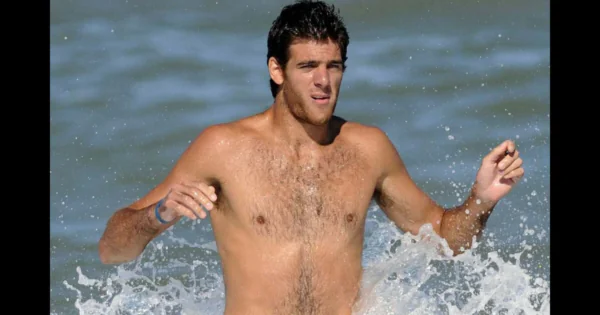
Del Potro Shirtless 4
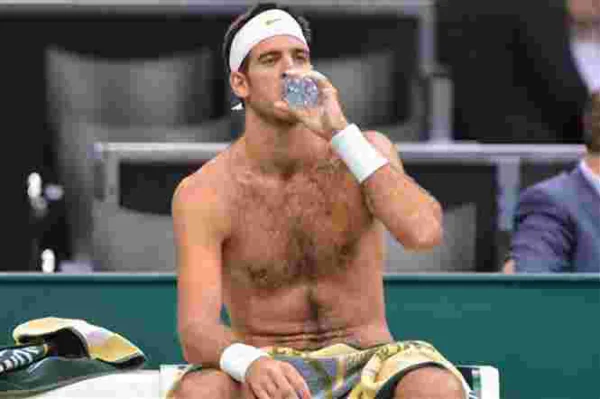
Del Potro Shirtless 3
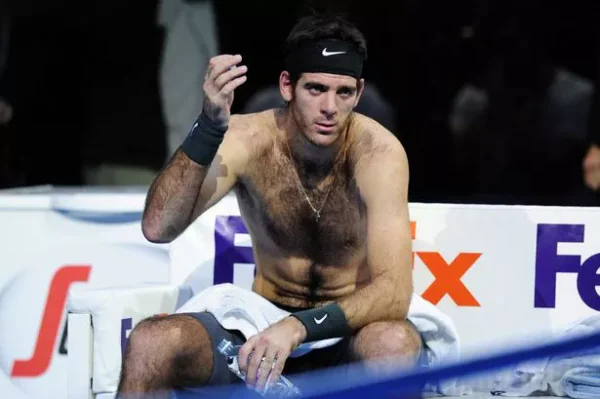
Del Potro Shirtless 2
Del Potro Shirtless
Del Potro Height / How to Get Body Like Del Potro
Juan Martín del Potro stands approximately 6 feet 6 inches tall, giving him significant leverage on his serve.
His lean and athletic physique is optimized for explosive movements and quick court coverage.
Core strength is essential for generating power in his forehand and serve, achieved through planks, medicine ball rotations, and stability exercises.
Leg strength is critical, with squats, lunges, and plyometric jumps forming the foundation for court speed and balance.
Shoulder and arm conditioning through resistance training helps maintain arm health and reduce injury risk.
Flexibility training, including dynamic stretching and yoga, improves range of motion for tennis strokes.
A balanced diet with lean proteins, complex carbohydrates, and healthy fats supports endurance and muscle recovery.
Cardiovascular conditioning, such as sprint intervals and agility drills, mirrors the demands of high-intensity tennis rallies.
Recovery routines like ice baths, foam rolling, and adequate sleep are crucial to maintaining performance.
Consistency in training, technique refinement, and rest cycles is key to sustaining an athlete’s peak form.
Interview Quotes of Del Potro
In 2009, he said, “Winning the US Open was a dream I didn’t think was possible,” on ESPN Tennis Live.
In 2012, Del Potro stated, “Every comeback makes me stronger, both physically and mentally,” on Tennis Channel Interview.
During a 2013 interview, he remarked, “Injuries teach you patience in ways victories cannot,” on Fox Sports Tennis Hour.
In 2014, he said, “I play each match as if it’s my last chance to prove myself,” on ATP World Tour Podcast.
During a 2015 press interview, Del Potro stated, “Focus is the difference between winning and losing at this level,” on ESPN Tennis Today.
In 2016, he remarked, “Representing Argentina motivates me more than any trophy,” on Olympic Tennis Special.
During a 2017 feature, he said, “Every point counts; you never know when momentum will shift,” on Tennis Channel Studio.
In 2018, he stated, “I trust my instincts on the court above everything else,” on ATP Live Press Conference.
During a 2019 interview, he said, “Recovery is as important as practice; you must listen to your body,” on Tennis Weekly.
In 2020, Del Potro reflected, “Tennis is a test of resilience as much as skill,” on Inside Tennis Podcast.
TV / Movie Dialogues of Del Potro
In 2009, he said, “One point at a time, that’s the only way to win,” in Road to the US Open.
In 2012, Del Potro remarked, “Injuries can break you, but heart can rebuild you,” in Tennis Legends Documentary.
In 2013, he stated, “Every forehand carries my determination,” in Ace Masters: Tennis Stories.
In 2014, he said, “Momentum swings like the tides, stay focused,” in The Court Chronicles.
In 2015, Del Potro remarked, “The hardest battles are against yourself,” in Inside the Tennis Mind.
In 2016, he stated, “Representing your country is bigger than any personal accolade,” in Olympic Tennis Highlights.
In 2017, he said, “Victory tastes sweetest after adversity,” in The Winning Serve.
In 2018, he remarked, “Technique matters, but belief wins matches,” in Tennis on the Edge.
In 2019, he stated, “Every tournament is a chance to grow,” in Grand Slam Stories.
In 2020, Del Potro said, “Legacy is built point by point, not overnight,” in Legends of the Court.
Controversies/Scandals of Del Potro
Del Potro’s career was largely free of scandals, with his reputation emphasizing professionalism and sportsmanship.
He faced minor criticism for withdrawing from tournaments due to recurring injuries, though these were health-related.
Media occasionally questioned his commitment when he missed multiple events in succession, but fans largely supported him.
Del Potro never faced legal issues or on-court behavior penalties significant enough to attract controversy.
He received scrutiny for on-court disputes with umpires early in his career, though these were rare.
Social media occasionally amplified fan frustration over his absences from major tournaments.
He was criticized for missing key Davis Cup matches due to injuries, though his contributions to Argentina were widely praised.
His long-term injuries led to speculation about his potential retirement multiple times.
Del Potro’s private life remained discreet, minimizing media scandals.
Overall, he is celebrated for resilience, humility, and dedication rather than being involved in controversies.
Lesser Known Unknown Facts Trivia of Del Potro
Juan Martín del Potro is nicknamed “Tower of Tandil” due to both his height and hometown.
He is renowned for having one of the most powerful forehands in tennis history.
Del Potro has had more than seven wrist surgeries throughout his career, impacting his playing style.
He began playing tennis at age 3 and quickly showed a natural aptitude for the sport.
Del Potro is left-handed but plays a one-handed backhand, a rarity among modern top players.
He is an avid fan of football and supports Argentine club Boca Juniors.
Del Potro trained with several Argentine tennis legends, including Guillermo Vilas and Gastón Gaudio.
Despite multiple injuries, he made several impressive comebacks and returned to top-tier competition.
He has a strong presence in charity events and frequently supports youth tennis programs in Argentina.
Del Potro is known for his calm demeanor on court, rarely showing frustration even in high-pressure moments.
Most Commonly Frequently Asked Discussed Questions/Topics with Answers on Del Potro
What is Del Potro’s height?
He stands approximately 6 feet 6 inches tall.
Which Grand Slam did Del Potro win?
He won the 2009 US Open.
Has Del Potro ever beaten Federer or Nadal?
Yes, notably in the 2009 US Open final against Federer and in several other ATP matches.
Why did Del Potro retire?
His retirement was primarily due to recurring injuries, especially wrist and knee problems.
Is Del Potro from Argentina?
Yes, he was born and raised in Tandil, Argentina.
What are Del Potro’s Olympic achievements?
He won a bronze medal in 2012 and a silver medal in 2016.
Why is Del Potro called the “Tower of Tandil”?
The nickname comes from his height and hometown, Tandil.
Does Del Potro have a powerful forehand?
Yes, his forehand is considered one of the most powerful and feared on tour.
Has Del Potro played in the Davis Cup?
Yes, he helped Argentina win its first Davis Cup in 2016.
What is Del Potro doing post-retirement?
He participates in exhibitions, mentoring programs, and charity events while staying engaged with tennis.