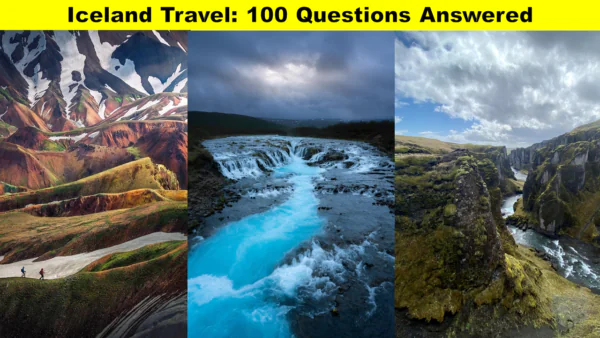
Iceland Travel: 100 Questions Answered based on NeemTime research
Planning & Logistics
1. What is the best time of year to visit Iceland? Summer (June–August) for 24-hour daylight and hiking; Winter (November–March) for Northern Lights and ice caves.
2. How many days do I need for the Ring Road? Most travelers recommend at least 7–10 days to avoid spending the entire trip in the car.
3. Is Iceland really as expensive as everyone says? Yes. Expect to pay $15–$25 for a casual lunch and $40+ for a standard dinner entrée.
4. Do I need to carry cash? No. Iceland is almost entirely cashless; even remote pay-toilets usually take cards or Apple Pay.
5. Is the Blue Lagoon a tourist trap? It is touristy and expensive, but most travelers agree it is still a unique, worthwhile experience at least once.
6. Blue Lagoon or Sky Lagoon? The Sky Lagoon is often preferred for its proximity to Reykjavik, “ocean-edge” feel, and adult-oriented atmosphere.
7. Should I book everything in advance? Yes, especially for summer. Accommodations and popular tours (like the Blue Lagoon) can sell out months ahead.
8. Can I see the Northern Lights in summer? No. It doesn’t get dark enough from May to August to see them.
9. What are the “F-Roads”? Unpaved mountain roads in the Highlands that require a 4×4 vehicle by law.
10. Do I need an International Driving Permit? Generally no, as long as your home license is in English or has a photo and a Roman-alphabet translation.
Transportation & Driving
11. Should I rent a car or take bus tours? Rent a car for freedom; take tours if you are uncomfortable driving in wind or snow.
12. Is a 4×4 necessary? In summer on the Ring Road, no. In winter or for the Highlands (F-roads), absolutely yes.
13. What is the “wind” warning I keep seeing? Icelandic wind can exceed 30–50 mph, strong enough to rip car doors off their hinges. Always hold the door with two hands.
14. Are gas stations common? Yes, but in the East and North, they are sparse. Never let your tank drop below half.
15. How do I pay for gas? Most pumps require a credit card with a 4-digit PIN. Prepaid gas cards are a good backup.
16. What is the speed limit? Usually 90 km/h on paved highways and 80 km/h on gravel. Speed cameras are frequent and fines are massive.
17. Can I sleep in my car? Only at designated campsites. Sleeping in a car or campervan on the side of the road is illegal.
18. How do I check road conditions? Use road.is and safetravel.is daily. Conditions change in minutes.
19. Is driving the Ring Road in winter safe? Only for experienced winter drivers. Blizzards and road closures are frequent.
20. What is the best car rental company? Local companies like Blue Car Rental and Lotus are highly rated for including better insurance coverage.
21. Do I need sand and ash insurance? Yes, especially in the south where windstorms can literally sandblast the paint off a car.
22. Are there many electric vehicle (EV) chargers? Yes, the Ring Road is well-equipped with chargers, though the Highlands are not.
23. Can I use Google Maps for navigation? Yes, but download offline maps as signal can drop in remote fjords.
24. What are the one-lane bridges? Common in rural areas. The rule is: the car closer to the bridge has the right of way.
25. Is there Uber or Lyft in Iceland? No. Use taxis, the Flybus, or the public Strætó bus system.
Packing & Gear
26. What is the most important item to pack? A high-quality waterproof and windproof shell jacket.
27. Should I bring an umbrella? No. The wind is too strong; it will break immediately.
28. Do I need hiking boots? Yes. Even for “easy” sights, paths are often muddy, rocky, or slippery.
29. Are jeans okay for hiking? No. Once they get wet, they stay wet and cold. Wear moisture-wicking layers.
30. How should I layer my clothes? Base layer (wool), mid-layer (fleece/down), and outer layer (waterproof shell).
31. Do I need to bring a swimsuit? Yes! Hot springs and local pools are a huge part of the culture.
32. Can I drink the tap water? Yes. It is some of the cleanest in the world. Don’t buy bottled water.
33. What kind of power adapter do I need? European Type C or E/F (two round pins).
34. Should I bring a sleep mask? Essential for summer trips due to the Midnight Sun.
35. Are there mosquitoes in Iceland? Generally no, but “midges” (biting flies) are common near Lake Mývatn in summer.
Sightseeing & Activities
36. What is the “Golden Circle”? A popular route near Reykjavik including Þingvellir National Park, Geysir, and Gullfoss waterfall.
37. Is the plane wreck at Sólheimasandur worth the walk? It’s a 45–60 minute walk each way for one photo. Many travelers find it overrated.
38. Where can I see puffins? Dyrhólaey, the Westman Islands, or Borgarfjörður Eystri (May–August).
39. Can I walk on the moss? NO. Icelandic moss is incredibly fragile and takes decades to regrow. Stay on marked paths.
40. Are the ice caves open year-round? Natural blue ice caves are usually only safe to visit from November to March.
41. Can I visit a volcano? You can visit old lava fields and tubes (like Raufarhólshellir) or check for active eruptions via the Icelandic Met Office.
42. What is Diamond Beach? A black sand beach where icebergs from the Jökulsárlón lagoon wash ashore.
43. Is whale watching better in Reykjavik or Husavik? Husavik is widely considered the “whale watching capital” with higher sighting rates.
44. How much does a Northern Lights tour cost? Around $50–$100. If the lights don’t appear, most companies offer a free “second try.”
45. Can I see the Northern Lights from the city? Occasionally, but light pollution makes them faint. Driving 20 minutes out of town is better.
46. Are the “Hidden Gems” actually hidden? Not anymore. If it’s on a blog, people are there. Visit early (before 8 AM) to avoid crowds.
47. Do I need a guide for glacier hiking? Yes. Walking on a glacier without a guide and proper gear (crampons/ice axe) is life-threatening.
48. Is the South Coast better than the North? The South has more famous waterfalls; the North is more rugged, quiet, and dramatic.
49. What is the “Justin Bieber Canyon”? Fjaðrárgljúfur. It’s beautiful, but stay behind the ropes to protect the vegetation.
50. How long does the hike to Glymur take? About 3–4 hours round trip. It involves a river crossing and some steep sections.
Food & Dining
51. What is the “must-try” food? The Icelandic hot dog (pylsur), lamb stew, and Skyr (thick yogurt).
52. Is fermented shark (hákarl) actually eaten? Mostly by tourists and for tradition. Locals don’t eat it daily.
53. Where can I buy cheap groceries? Look for Bónus (the pink pig logo) or Krónan. Avoid “10-11” as it is very expensive.
54. Is there a tipping culture? No. Service and tax are included. Tipping is not expected but appreciated for exceptional tours.
55. How do I buy alcohol? You can only buy alcohol (above 2.25%) at state-run stores called Vínbúðin.
56. Is the “hot dog” really that good? Yes, get it “með öllu” (with everything). The lamb-based meat is unique.
57. Are there vegetarian/vegan options? Surprisingly, yes. Reykjavik has a great vegan scene, and most gas stations have a veggie burger.
58. Why does the hot water smell like sulfur? It’s geothermal water. It smells like rotten eggs but is perfectly safe and great for your skin.
59. Can I eat whale or puffin? Some restaurants serve them, but many locals and tourists choose to “watch, not eat” for conservation reasons.
60. What is a “Fish Store” (Fiskbúð)? The best place to buy fresh, high-quality fish to cook at your Airbnb.
Culture & Etiquette
61. What is the most important rule at local pools? You must shower naked and thoroughly before putting on your swimsuit. It is strictly enforced.
62. Do Icelanders speak English? Yes, almost everyone is fluent.
63. How do you say “Thank you” in Icelandic? Takk (pronounced like “tack”).
64. Is Iceland safe for solo travelers? It is consistently ranked as the safest country in the world.
65. Is it okay to pet the Icelandic horses? Only if they come to the fence and there are no signs forbidding it. Never feed them.
66. What should I avoid doing? Don’t buy bottled water, don’t stop your car in the middle of the road for photos, and don’t litter.
67. Is the “Phallological Museum” real? Yes, it’s a world-famous museum in Reykjavik dedicated to penises of various mammals.
68. Do I need to worry about crime? Hardly. Use common sense, but violent crime is nearly non-existent.
69. What is the “Midnight Sun”? In June, the sun never fully sets. It just touches the horizon and goes back up.
70. Are there any “dangerous” animals? No. No bears, no venomous snakes. The most dangerous things are the weather and the ocean.
Budgeting & Costs
71. How much should I budget for a week? Excluding flights, a mid-range budget is roughly $1,500–$2,500 per person.
72. Are hostels a good option? Yes, they are clean and modern, but still cost around $40–$60 for a dorm bed.
73. Can I save money by camping? Yes, significantly. A campsite fee is usually around $15 per night.
74. Is the VAT refund worth it? Yes. If you spend over 6,000 ISK on souvenirs, get a tax-free form to get ~14% back at the airport.
75. Should I buy alcohol at Duty-Free? YES. Buy your wine/beer/spirits at the airport arrivals hall before leaving the airport; it’s 30–50% cheaper.
76. How much is a beer in a bar? Usually $10–$14. Look for “Happy Hour” apps like Appy Hour to save.
77. Is the Reykjavik City Card worth it? If you plan to visit multiple museums and use the city buses and pools, yes.
78. Do I need to pay for parking at waterfalls? Many popular spots (Seljalandsfoss, Thingvellir) now charge $5–$8 via apps like Parka.
79. Are public toilets free? In Reykjavik, usually. At remote attractions, there is often a small fee (~200 ISK).
80. Is it cheaper to fly into Reykjavik? International flights land at Keflavik (KEF), about 45 minutes from Reykjavik.
Health & Safety
81. What is “Sneaker Waves”? At Reynisfjara beach, massive waves can suddenly pull people into the ocean. Never turn your back on the sea.
82. What is the emergency number? 112.
83. Is there a lot of hiking-related injury? Yes, mostly from people being unprepared for wind or slipping on ice/mud.
84. Do I need special insurance? Ensure your travel insurance covers “search and rescue,” as Icelandic rescue teams (ICE-SAR) are volunteers.
85. Can I get a SIM card at the airport? Yes, you can buy a Nova or Siminn card at the 10-11 store in the arrivals hall.
86. How is the cell coverage? Excellent, even in very remote areas, though it can fail in deep valleys.
87. What if I get stuck in a storm? Stay in your car. Do not try to walk for help. Wait for the weather to clear or for help to arrive.
88. Are the hot springs safe to bathe in? Only designated ones. “Natural” ones can be boiling or contain bacteria. Always check local signs.
89. Is there pharmacy (Apótek) access? Yes, in towns. They have limited hours, especially on weekends.
90. Should I worry about volcanic ash? Usually no, unless there is an active eruption. If so, follow safetravel.is instructions.
Specific Regional Questions
91. Are the Westfjords worth the drive? Yes, if you want solitude and dramatic scenery, but they require a lot of time and slow driving.
92. How do I get to the Highlands? You need a 4×4 and the roads are only open in summer (July–September).
93. Can I visit Greenland from Iceland? Yes, there are day trips and multi-day tours flying out of Reykjavik’s domestic airport.
94. What is the “Miniature Iceland”? The Snæfellsnes Peninsula, because it has a glacier, volcano, and waterfalls all in one small area.
95. Is Akureyri worth visiting? Yes, it is a charming “capital of the north” with great food and a relaxed vibe.
96. Can I see the plane wreck from the road? No, it is hidden behind sand dunes.
97. Is the ferry to the Westman Islands (Heimaey) reliable? Usually, but it can be canceled in high seas. Book in advance if bringing a car.
98. How do I see the Studlagil Canyon? There are two sides. The west side is a viewpoint; the east side requires a hike but allows you to go down to the basalt columns.
99. Is it dark all day in December? Not totally. You get about 4–5 hours of “twilight” and soft light between 11 AM and 3:30 PM.
100. Should I go back? Almost every travelers says: “Once is not enough.”